
Most Romantic Beaches in Italy
Renaissance artist Leonardo da Vinci. He painted it between 1503 and 1519.
Why Italy Is Called Italy: The Surprising Story Behind
Italy

Italy is a cultural superpower and one of the most
famous countries in the world, globally celebrated
for its art, cuisine, and history.
The Complete History of the Roman Colosseum Like You’ve
Never Seen It Before
Top 3 Famous Italian Painters
Discover the Italy: Cities, Nature & Culture
Bella Ciao - Italian Partisan Song (English Lyrics)
Fabio Panetta is the Governor of the Bank of Italy. He officially assumed office on November 1, 2023
Top Places To Visit in The Italy -
Travel Guide
The stars of Italian cinema are always at the forefront of the world's stars
Italy’s Economy Is Cracking And It Could Drag Europe Down

The Meloni effect: Has Italy's prime minister delivered on her promises? • FRANCE 24 English
Escorts in Italy chat discreetly online throughout the country. Major cities like Milan and Rome attract high-end private adult services. Milan charges a high price for high-end services. High-end escorts operate in the city center and the Fashion District, often accepting private appointments for business travelers
The Nordic Model makes sex workers LESS safe
The golden age of Italian cinema and beyond | Cinema | Showcsse


As Italy's financial and commercial capital, Milan possesses the country's highest GDP and features one of Europe
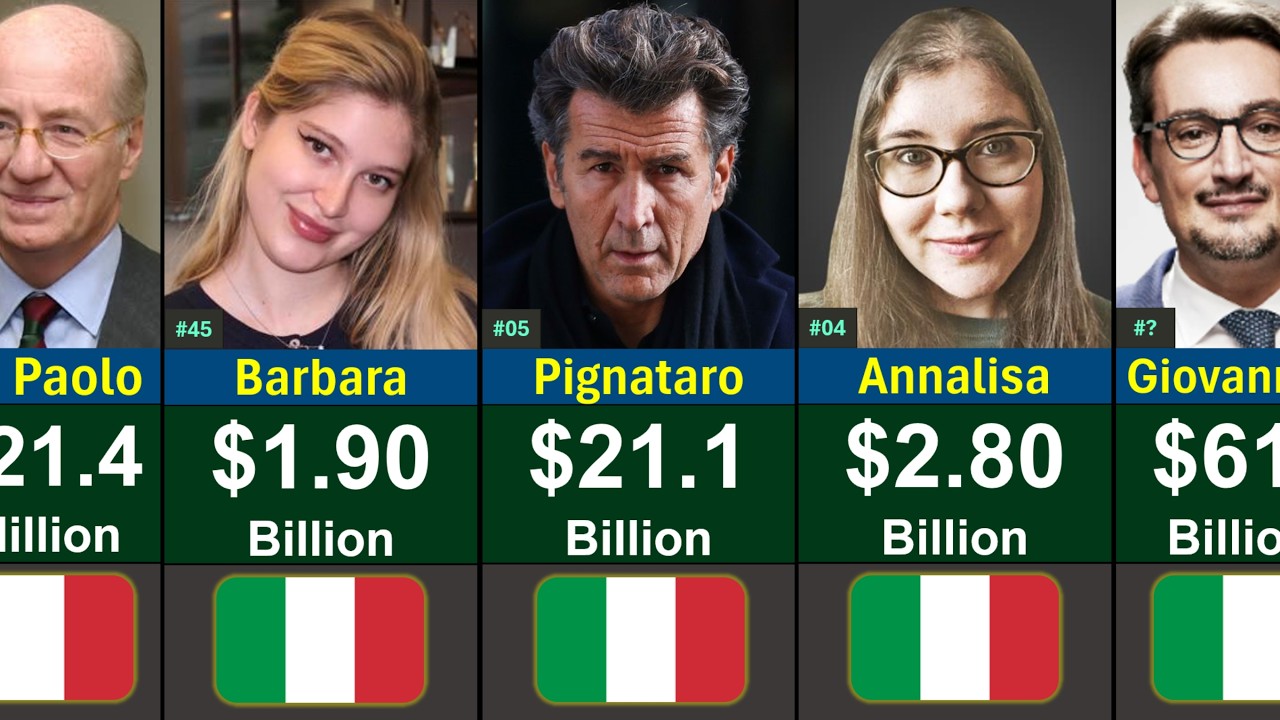
Top Richest People in Italy 2026 | Global Rank
The Italian beauty

Everything about the beautiful Italian beaches. Italy offers a stunning variety of beaches, from turquoise Sardinian coves to dramatic cliffside shores along the Amalfi Coast and Calabria.
What are the best nudist beaches in Italy? Naturist Beaches in Italy


This is Italian beauty

Videos of Who is the Author of the Mona Lisa

Videos of Colosseum Rome: Complete Tour History & Tips

Videos of The Italy You Won’t Believe Exists | Hidden Beauty Captured in 4K

Videos of Sophia Loren → Gina Lollobrigida → Claudia Cardinale Italian Cinema Legends #ItalianCinema

Videos of Italy’s far-right leader Meloni forms new government

Videos of Life in ITALY – The Country of THE MOST BEAUTIFUL WOMEN – DOCUMENTARY

Videos of Italian sex trade fueled by human trafficking | Al Jazeera English

Videos of Italy's Summer Paradise 4K | Breathtaking Coastal Cliffs & Sunlit Seaside Towns

Videos of Made in Italy 2030: A discussion of the country's new industrial strategies

Videos of Italy, a pioneer in regulating artificial intelligence • FRANCE 24 English

Videos of Italian Legends Including: The Warrior Saint - The Story of Saint George and the Dragon

Videos of Extreme heat threatens Italy's Parmesan heartland

Videos of FULL BRIEFING: Italy Secures €45B for Farmers! Lollobrigida Speaks on EU & Mercosur Deal | AC14

Videos of A Journey into "Made in Milan" Chemistry: Discovering Chemical Roadmaster

Videos of Exploring Italy's Electronics and Printing Market

Videos of Top 10 Italian Cheeses: A Gourmet Journey

Videos of VENICE Italy - Rialto Fish Market 2026

Videos of Italian companies prefer to relocate their operations to the United States, so as not to pay the exorbitant customs duties imposed by Trump. Why customs duties don’t have to be a bottleneck for your European expansion

Videos of Italy releases 9M barrels to stabilize oil market Big move by Italy #Oil #GlobalNews

Videos of Italy’s 2026 Vision: The Digital and Green Revolution You Didn’t See Coming

Videos of Focus: Italy’s core values — family, community, tradition, beauty, freedom, and craftsmanship. How to Be Italian: 20 Rules Italians Never Break

Videos of Saracen Joust Week, September 2025

Videos of A Pride Weekend in Milan | Duomo, Jollibee, City Walk & Pride Atmosphere

Videos of The ENTIRE Story of the Italian Empire - Full Detailed Documentary

Videos of Italian light industry. The famous "three F" (Fashion, Food, and Furniture). We the ItaliaNews: Science and Innovation 3/2026

Videos of Italy's Institutional Chaos: Why 70 Governments in 70 Years ??

Videos of The TRUE Reality of Italy's Economy (The Beautiful Country Slowly Eating Itself?)

Videos of How Ferrari Makes More Money by Selling Fewer Cars | The Billion-Dollar Strategy #shorts #ferrari

Italy does not have a single officially designated national flower, though popular tradition frequently links it to the white lily (Lilium candidum) or the flower of the strawberry tree (Arbutus unedo), which patriotically features white blossoms alongside green leaves and red berries matching the Italian flag.Origins and History White Lily: Cultivated for nearly 3,000 years, originating from the Balkans and the Middle East, and heavily tied to religious purity in Renaissance art.Strawberry Tree Flower: Native to the Mediterranean basin, adopted as a patriotic symbol during the 19th-century Risorgimento unification movement because its colors mimic the Tricolore flag.Natural HabitatWhite Lily: Thrives in warm, temperate climates in well-drained, porous soils, easily adapting to gardens across the Italian peninsula.Strawberry Tree: Grows wild across Mediterranean maquis shrublands, rocky slopes, and open woodlands, preferring acidic or neutral soils with plenty of sunlight.The official national flower of Italy is the White Lily (Lilium candidum), often referred to locally as the Giglio. While various flowers like the red poppy are deeply cherished in the countryside, the white lily remains the formal emblem representing the nation's purity and historical heritage. This iconic bloom has played a central role in Italian art and heraldry for centuries, especially in cities like Florence. Understanding the significance of the Giglio requires a look into its formal status and cultural deep-roots. Other Italian flower, Madonna lily, giglio della Madonna, lilium candidum, taly is a beautiful country and it is actually the fifth most visited country in the world. For those who live there or have visited, it is easy to see why. Although many of us may not speak Italian, what we do have in common is our love and appreciation for beauty — especially floral beauty. Italians love beautiful things, whether that’s art or nature. That’s why it should come as no surprise that the national flower of Italy is one that is absolutely beautiful: the white lily. However have you ever wondered why the white lily is the national flower of the country? In addition, did you know that there is a lot of folklore and symbolism associated with this flower? Its place in Italian culture.The Geographic Context for Italy’s National Flower. Since it is a long peninsula, it has a pretty unique geography as well as climate. Typically, Italy has a Mediterranean climate. This means that the winter season is pretty mild with some rain. Summers, on the other hand, are usually quite hot, dry, and sunny. Still, you can expect a totally different experience in northern Italy in comparison to southern Italy. The south in Naples and surrounding areas rarely ever see snow. Meanwhile, the north has tons of mountain lakes that are great for swimming. Overall, Italy has a unique regional topography and this is what makes it such a popular travel destination. In this kind of climate, there is also incredibly unique flora that grows throughout the country. In fact, the areas in which the country’s native vegetation grows can be separated into three distinct zones: the Alps, the Po valley, and the Mediterranean-Apennine area. Let’s find out how the white lily was chosen as the national flower and where it grows in the country.The white lily is the national flower of Italy. When you take a look at this flower, it’s easy to see why Italy chose it to represent them. In fact, this beautiful flower has even been ranked the fourth most popular flower in the world. The flower is also known as Lilium candidum and the Madonna lily. It is a plant in the true lily family and is native to the Balkans and Middle East. However, it has also been naturalized throughout parts of Europe, such as Italy. It is also a flower that has been cultivated on the earth since ancient times. In fact, it has been cultivated for nearly 3,000 years. The white lily is also a quite fragrant flower. As their name states, they are easily identified thanks to their full white outer appearance and light yellow inside. They are often described as looking like trumpets. It is because of their unique appearance that many use them as centerpiece flowers or in bouquets. As a flower that has been around for so long, it has managed to cultivate a lot of folklore and symbolism to it as well.


Traditional mechanical windmills were rare in Italy compared to watermills, but historical records show they were built starting in the Renaissance era, primarily in Tuscany and parts of the south, used for grinding grain, making gunpowder, or pumping water.Historical Windmills Renaissance engineering: Italian engineers and noble families, such as the Orsini family in Sorano and Grand Duke Cosimo I in Grosseto, erected custom windmills starting in the 16th century.Tuscan sites: Regions like Tuscany hosted various historic structures, including a famous 19th-century mill at Fattoria Lavacchio in Chianti.Surviving structures: The Chianti farm features what is preserved as Italy's only working historical windmill, restored to grind organic flour. Other locations feature disused mills or ruins converted into taverns.Modern Wind Energy Geographic shift: Traditional wind-powered grain mills have been replaced by modern industrial wind farms containing thousands of large aerogenerators.Concentration: Over 90% of modern wind power capacity in Italy is concentrated in southern regions and islands like Apulia, Campania, Basilicata, Calabria, Sicily, and Sardinia. Historical mechanical windmills in Italy were rare, localized solutions confined to windy, dry coastal areas or specific agricultural estates lacking fast-flowing streams.Notable Historical Locations The Spanish Windmill (Mulino Spagnolo): Located in Orbetello, Tuscany, this solitary stone tower is the last survivor of a 15th-century cluster originally built by the Sienese and later adapted by Spanish rulers to grind wheat using coastal sea breezes. Fattoria Lavacchio (Mulino a Vento): Located in Pontassieve, Tuscany, this site houses Italy's only fully restored and working traditional windmill, which dates back to the 19th century and features mechanisms inspired by Leonardo da Vinci’s early engineering studies. Trapani and Marsala Salt Pans: In western Sicily, stone tower windmills with multi-bladed sails were heavily utilized starting around 1750 to power pump systems, moving seawater through shallow basins for industrial salt extraction.Why They Remained Rare Geography and Water Availability: Italy’s abundant alpine and Apennine river systems meant that efficient watermills (mulini ad acqua) remained the default choice for local lords and farmers. Wind Consistency: The Mediterranean's variable wind patterns made large, rigid mechanical setups less reliable than the steady, year-round flow of regional streams. Modern wind farms in southern Italy concentrate over 90% of the nation's wind capacity, led by Puglia, Campania, and Sicily.Capacity and LocationPuglia leads the country with roughly 2.5 gigawatts of capacity, with heavy concentration in areas like the Dauni Mountains.Other key regions include Sicily, Campania, Basilicata, and Calabria, which together form the backbone of Italian wind energy.Onshore dominance remains absolute, though limited offshore steps exist, such as the Beleolico park near Taranto.Modern Trends and ProjectsRepowering initiatives involve replacing older turbines with taller, higher-capacity models to increase yields without expanding land footprints.Active construction includes projects by major firms like RWE—such as the Serra Palino (47 MW) in Puglia and Venusia (45 MW) in Basilicata—targeting completion.Port integration via the Ports' Decree positions hubs like Taranto and Augusta to stage and assemble renewable components.Explore the Enel Group overview on regional wind capacity.Read Stantec on southern repowering projects.Check Politecnico di Bari for data on Puglia's wind dominance.Would you like to focus on offshore developments or the environmental impact of these southern wind farms? Italian modern wind power capacity in Italy. Wind power is an established component of Italy’s renewable energy sector and contributes to the country’s electricity generation mixture. According to the IEA Wind TCP national report, Italy had about 12.1 GW of installed wind power capacity at the end of 2023, generating around 23.4 TWh of electricity and meeting about 7.6% of national demand. Italy’s wind energy capacity is predominantly onshore, with most installations located in southern regions such as Apulia, Campania, Sicily, and Sardinia, where wind conditions are more favorable. Regional data indicate that southern regions amount for the majority of capacity and generation, with Apulia, Sicily, Campania, and others leading the total production capacity. Growth in new onshore wind capacity has faced challenges in recent years, including permitting constraints, landscape protection rules, and local opposition in some areas, which have slowed deployment compared to earlier phases. Industry analysis and wind power reports discuss regulatory and permitting barriers that have affected project timelines.


Italy features 57 state-owned ports of national relevance (frequently cited as 57 or 58 commercial ports) across its coastline. These major public port areas are organized and managed under a unified network of 16 Port System Authorities (Autorità di Sistema Portuale) coordinated by the Ministry of Infrastructure and Transport.Key Port System Authorities & HubsGenoa & Savona: Western Ligurian Sea hub serving as a primary northern gate.Trieste & Venice: North Adriatic nodes connecting central European rail corridors.Gioia Tauro: Calabria-based leader in Mediterranean container transshipment.Augusta & Palermo: Sicilian focal points handling extensive island and domestic transit. Italy's main container hubs handled 12.8 million TEUs. Gioia Tauro, Genoa, and Trieste lead the volume, connecting directly to the Mediterranean and Scandinavian-Mediterranean European TEN-T corridors via essential rail and highway routes. Major Container Hub Volumes Gioia Tauro: Handled approximately 4.5 million TEUs, acting as the nation's premier transshipment giant and southern anchor.Genoa (with Vado Ligure): Handled roughly 2.4 million TEUs, serving as the primary gateway for northern mainland import-export hinterland cargo. Trieste: Moved a high proportion of its container volume via rail, acting as the northern Adriatic powerhouse for Central and Eastern European traffic.Rail and Road European Corridor Integration Mediterranean Corridor: Links Spanish and French borders through Turin, Milan, Verona, and Trieste. Genoa connects via the developing Third Giovi Valley high-capacity rail project toward Milan and Alpine crossings, while Trieste links through the Karst crossing toward Slovenia.Scandinavian-Mediterranean Corridor: Integrates southern hubs like Gioia Tauro and Taranto northward through Naples, Rome, and the Brenner Pass into Austria and Germany. Gioia Tauro scaled its intermodal rail operations past 1,000 annual trains to reduce ship-to-ship dependency.Road Infrastructure: National highways (such as the A1 and A7) carry over 60% to 80% of domestic freight throughput, providing fast first- and last-mile access from docks to intermodal freight villages like Marcianise and Verona. Maritime passenger transport in Italy relies on extensive domestic and international networks handling over 100 million passengers annually. Key domestic and Mediterranean hubs include Naples, Civitavecchia, and Genoa, while transatlantic passenger travel to the United States is served exclusively via seasonal repositioning and ocean cruises rather than scheduled liners.Major Domestic and International PortsNaples (Napoli): One of the busiest EU passenger ports, connecting the mainland to Ischia, Capri, and Sicily.Civitavecchia: Serving Rome, it functions as Italy’s leading cruise stopover and a major hub for Mediterranean ferries.Genoa and Livorno: Vital northern gateways managing heavy island ferry volume to Sardinia and Corsica, alongside international links.Bari and Ancona: Primary eastern gateways on the Adriatic side directing international traffic toward Greece, Albania, and Croatia.Transatlantic Travel to the United States and WorldwideNo Scheduled Liners: Regular commercial passenger ocean liners running point-to-point from Italy to the United States ceased decades ago with the historic Italian Line.Transatlantic Repositioning Cruises: Travelers can book passage to and from the U.S. (such as New York, Miami, and Fort Lauderdale) typically during spring (April) and autumn (October–November) as major cruise lines like MSC Cruises and Princess Cruises move ships between European and American seasonal itineraries.Global Itineraries: Extended world cruises depart from Italian ports annually, circumnavigating the globe via multi-month voyages connecting to Africa, Asia, and Australia.


Italian painters shaped Western art by inventing linear perspective, mastering human anatomy, and pioneering dramatic realism. Key figures like Leonardo da Vinci, Michelangelo Buonarroti, and Caravaggio transformed visual culture from the Middle Ages through the Baroque era. Foundations and Innovations Giotto di Bondone (1267–1337): Broke away from flat medieval styles to introduce emotional depth and lifelike volume. Masaccio (1401–1428): Applied mathematical linear perspective and chiaroscuro (light-dark contrast) to create 3D space on flat surfaces. Sandro Botticelli (1445–1510): Celebrated mythological grace and lyrical line work in masterpieces like The Birth of Venus. The High Renaissance Peak Leonardo da Vinci (1452–1519): Combined rigorous scientific observation with sfumato (blended transitions) to capture realistic human psychology. Michelangelo Buonarroti (1475–1564): Painted monumental, dynamic human forms, most famously on the ceiling of the Sistine Chapel. Raphael (1483–1520): Perfected harmonious composition, clarity, and balance in works like The School of Athens. Color and Dramatic Realism Titian (1490–1576): Led the Venetian school with rich, expressive use of color and loose brushwork that influenced future generations. Caravaggio (1571–1610): Introduced intense tenebrism (extreme dark and light) and gritty realism, revolutionizing Baroque painting across Europe. Artemisia Gentileschi (1593–1653): Created powerful, emotionally charged depictions of female strength during the Baroque period.If you'd like, let me know:Would you like to focus on a specific art movement (like the Renaissance or Baroque). Renaissance artists developed realistic perspective through mathematical linear perspective, pioneered by Filippo Brunelleschi around 1415, which utilized a single vanishing point and orthogonal lines. Brunelleschi demonstrated this, involving converging parallel lines and a painted panel of the San Giovanni Baptistery with a mirror, allowing artists like Masaccio to create three-dimensional depth on flat surfaces. For more details, visit TheCollector.J ohn Cabot University Discover the Story Behind Perspective While You Take Art ...19.04.2016 г. — To represent an enhanced dimension of realism in their work, Renaissance artists performed careful observations of natureì. Italy holds a legendary place in sculpture history, led by masters like Donatello, Michelangelo Buonarroti, and Gian Lorenzo Bernini. Their work shaped Western art just as profoundly as any painter's.Key Sculptors and Masterpieces Donatello (1386–1466): Early Renaissance pioneer who created the first freestanding nude male statue since classical antiquity with his bronze David. Michelangelo (1475–1564): High Renaissance titan renowned for carving the monumental marble David in Florence and the emotional Pietà in Rome. Gian Lorenzo Bernini (1598–1680): Baroque genius famous for theatrical dynamism, capturing motion in works like Apollo and Daphne and Ecstasy of Saint Teresa. Antonio Canova (1757–1822): Neoclassical icon celebrated for soft, lifelike marble textures in pieces like Psyche Revived by Cupid's Kiss. Italy features key artistic periods like the Renaissance, Baroque, and Neoclassical, best seen in major hubs such as Florence, Rome, and Milan. Renaissance Florence: Visit the Uffizi Gallery to see works by Botticelli and Leonardo da Vinci, or the Galleria dell'Accademia for Michelangelo's David. Milan: View Leonardo da Vinci's The Last Supper at Santa Maria delle Grazie. Baroque Rome: Explore Galleria Borghese for sculptures by Bernini and paintings by Caravaggio. Rome: Walk through Palazzo Barberini to see grand Baroque ceilings and architecture by Bernini and Borromini. Neoclassical Milan: Visit Villa Carlotta on Lake Como or the Pinacoteca di Brera for sculpted and painted works inspired by ancient Greece and Rome. Rome: See pieces at the Galleria Nazionale d'Arte Moderna.


In Italy, simple drug possession and use in private are not criminalized This statement is partially false and based on a misunderstanding of Italian law. Under Presidential Decree No. 309/1990, the actual consumption or use of drugs is not legally defined as an offense, meaning you cannot be punished simply for having drugs in your bloodstream, whether in public or private. However, possession of any amount of an illegal drug—regardless of whether it is in public or private—is illegal and subject to administrative penalties if intended strictly for personal use.Legal Reality in ItalyUse vs. Possession: The law targets the possession of illicit substances, not the physiological act of consumption.Location Does Not Matter: Possession for personal use is prohibited everywhere (public or private spaces), not just in public.Administrative Sanctions: Being caught with drugs for personal use results in administrative measures (such as the suspension of a driver's license, passport, or firearms permit) rather than a criminal record or prison sentence.Criminal Threshold: If the quantity exceeds personal limits or indicates distribution, possession becomes a serious criminal offense under Article 73, carrying prison time. Major container port seizures in Italy in 2026 included over 2 tonnes of cocaine at the Port of Genoa in January and 770 kilograms of cocaine hidden in a banana shipment at the Port of Vado Ligure in July.Major 2026 Port SeizuresPort of Genoa (January 8, 2026): Customs and Guardia di Finanza seized over 2 tonnes of pure cocaine in 87 jute sacks inside a container from Colombia.Port of Vado Ligure (July 21, 2026): Authorities intercepted 770 kilograms (650 bricks) of high-purity cocaine hidden inside a refrigerated banana container from Ecuador, following an earlier 340 kg bust at the same port. To combat drug trafficking, the Italian government deploys law enforcement agencies for border and port seizures, targets organized crime syndicates through specialized anti-mafia frameworks, and enforces strict criminal penalties under Presidential Decree No. 309/1990. To distinguish personal use from trafficking, the Italian judicial system relies on a flexible evaluation of circumstantial evidence rather than rigid limits alone:Circumstantial Indicators: The number of individual doses exceeding average daily use, the presence of packaging tools or scales, and the discovery of cutting agents or large sums of cash. Behavior and Context: The defendant's lifestyle, manner of concealment, economic status relative to reported income, and personal statements or criminal records. Quantitative Guidelines: Reference tables for maximum holdable quantities serve as an interpretive tool for judges, though defendants can present evidence to counter the presumption of dealing. Drug offences in Italy: conspiracy, dealing and use. criminal. Irrelevance of personal use of narcotics. In this case that person does not commit a criminal offence but an administrative one pursuant to the article 75; The assessment of the destination of the drugs (whether for personal use or transfer to third parties which represents a criminal offence) is made by the judge using some parameters such as: the quantity; the quality and composition of the substance; the use of equipment for weighing or packaging of the substance and the concrete circumstances of the case. In Italy, the legal framework for drug possession is nuanced, with a focus on personal use and administrative penalties rather than criminal prosecution. Here are the key points regarding drug possession laws in Italy: Cannabis: Personal possession of up to 5 grams is subject to administrative sanctions, including fines and counseling sessions, rather than imprisonment. Recreational Drugs: Most recreational drugs remain illegal, with penalties varying based on the substance and the circumstances of possession. Medical Cannabis: Prescribed medical cannabis is legal and can be obtained through AIFA-authorized channels. Designer Drugs: Possession of designer drugs like NBOMe or synthetic cannabinoids can lead to criminal charges with severe penalties. Trafficking: Possession aimed at trafficking is treated as a criminal offense and can lead to severe penalties, including imprisonment. It is essential to stay informed about the latest laws and to consult legal experts if facing issues related to drug possession in Italy The criminal relevance of drug dealing. The sanction may vary according to the type (light or heavy) of the drugs: For "heavy" drugs (heroin, cocain, ..): - with imprisonment from six to twenty years and with the payment of a fine from € 25,822.00 to € 258,228; For "light drugs" (marijuana, hashish): - with imprisonment from two to six years and with the payment of a fine of 5,164 euro to 77,468 euro. As pointed out, minor drug crimes are punished with imprisonment from six months to four years and with the payment of a fine from euro 1,032 to euro 10,329, without distinction between light and heavy drugs. Cooperating with the police cannot lead to avoid prosecution, but gives a considerable advantage regarding the sentencing (mitigating circumstance). Drug trafficking consiprancy. The most serious drug related crime is drug consiprancy, which consists in three or more offenders aiming at illicit trafficking of narcotic or psychotropic substances. The law punishes with not less than twenty years those who "promotes, establishes, manages, organizes or finances" the criminal association with the purpose of drug dealing. The simple associate, however, is punished with imprisonment of not less than ten year.


In 2025, Italy witnessed significant law enforcement operations against violent criminal gangs linked to international drug trafficking. Italian authorities substantially dismantled violent international drug trafficking syndicates between 2025 and 2026, driven by Italy's role as a European entry point for North African hashish and South American cocaine. Italian authorities substantially dismantled violent international drug syndicates through major joint operations, including a December 2025 nationwide crackdown resulting in 384 arrests and a June 2026 raid breaking up a €100-million clandestine underground banking network. These operations targeted complex networks moving South American cocaine and regional narcotics through Italian transit hubs.Major Enforcement Operations Nationwide Sweep (December 2025): Italian police arrested 384 people, investigated over 650 others, and seized 1.4 tonnes of illicit drugs alongside dozens of firearms.Underground Financial Network (June 2026): Police busted a clandestine Chinese-run banking hub in Prato that moved €80–100 million annually to anonymously finance mafia and international cartels.Transatlantic Cocaine Ring (April/May 2025): Supported by Europol, a multi-country operation dismantled an Italian-led network importing cocaine paste from Colombia and running clandestine labs in Belgium.Core Criminal DynamicsFinancial Laundering: Syndicates increasingly rely on invisible underground remittance systems rather than physical cash movement. Mafia Integration: Groups like the 'Ndrangheta and Camorra coordinate directly with Latin American cartels and Balkan networks to secure European entry points. MILAN, Dec 20 (Reuters) - Italian police said on Saturday they had arrested 384 people and seized 1.4 tonnes of drugs in a large-scale operation against drug trafficking. In addition to the arrests, officers had put under investigation 655 individuals, including 39 minors, and confiscated 35 kg of cocaine and more than 40 firearms, police said in a statement. The operation, concluded on Friday in several provinces, led to the temporary closure of five cannabis shops in three cities after 312 inspections. During the checks, the police said they had seized 296 kg of cannabis products which initial tests had shown to be illegal drugs. Italy in June approved a security decree banning so-called "legal" cannabis and outlawing the trade of "cannabis light", or hemp, which unlike marijuana has no psychoactive effects. In Italy, national law enforcement seized over 58 tons of narcotics in 2024 (a decrease from over 88 tons in 2023). Across the EU, the illicit drug retail market generates a minimum value of €31 billion, with Europol coordinating cross-border operations via intelligence sharing, joint investigation teams, and port security strategies.Italy Seizure StatisticsTotal Volume: Law enforcement reported over 58,000 kg of narcotics seized during 2024.Cocaine Reductions: Cocaine seizures decreased by roughly 44% in 2024 compared to peak prior-year interceptions.Trend Context: Annual reports by Italian anti-drug authorities (DCSA) highlight that trafficking remains a primary income and operational focus for organized crime groups like the 'Ndrangheta and transnational networks.Economic Impact of Operations Market Value: The European drug market represents a multi-billion-euro criminal economy (estimated at a minimum retail value of €31 billion) that directly funds violent syndicates and fuels corruption. Italy’s law enforcement agencies—including the Guardia di Finanza, the State Police, and the Carabinieri—have executed several major anti-drug operations targeting massive international shipments, clandestine financial networks, and mafia asset seizures.The most prominent recent drug trafficking operations in Italy highlight a diverse range of criminal methods and law enforcement tactics. Maritime Interceptions & Massive Seizures The Atlantic Ocean Intercept: The Guardia di Finanza seized 2.6 tonnes of pure cocaine worth an estimated €500 million from an ultra-fast rigid inflatable boat off the coast of Portugal. Coordinated by prosecutors in Brescia, the operation dismantled a transit loop where smugglers recovered South American cargo dropped at sea. The Vado Ligure Banana Shipment: Authorities intercepted a refrigerated container arriving from Ecuador at the Port of Vado Ligure, uncovering 1,700 pounds (650 packages) of cocaine hidden among banana pallets. The street value of the haul was estimated at $290 million. Operazione Abisso (Operation Abyss): Coordinated by the Catania Anti-Mafia District Directorate, this operation resulted in 15 arrests after exposing a complex plot to recover nearly two tonnes of cocaine dropped into the sea off the coast of Sicily.. It allowed Albanian trafficking rings and Italian mafias to virtually transfer €80 million to €100 million annually across Europe to pay for drug consignments with total anonymity. Messina Denaro Asset Seizure. The Udine Financial Police dismantled a sweeping drug ring, placing 49 people under investigation and issuing 32 precautionary warrants. The ring distributed cocaine, hashish, and marijuana into northern tourist hubs and involved unexpected, clean-cut professionals.The Italy-Albania Eurojust Raids: A joint operation backed by Eurojust led to the arrest of 12 suspects tied to a violent "mafia" network involved in drug trafficking, money laundering, and murder across both nations. A recent multi-country operation supported by Europol targeted an organized network smuggling counterfeit cigarettes into Europe, led by the European Public Prosecutor’s Office in Turin, Italy. The action involved authorities from Italy, Poland, France, the United Kingdom, and Switzerland.Background and Investigation Origin: Launched in September 2024 following the seizure of 12 million counterfeit cigarettes at the Port of Genoa.Route: Products were produced in Armenia, shipped through Georgia into the European Union.


Italy is a gateway for South American cocaine into the European Union. Italian authorities intercept nearly 40% of the EU's total cocaine supply. The country's concrete participation as a logistics hub for international cartels is expressed through several specific mechanisms: Key logistical entry points in Italy. The names: Gioia Tauro is the primary logistical entry point for South American cocaine in Italy, historically accounting for the vast majority of maritime cocaine seizures nationwide due to its heavy control by the Calabrian 'Ndrangheta.International cartels exploit several major Italian seaports as strategic transshipment hubs:Major Seaports and Hubs Gioia Tauro (Calabria): Italy's largest transshipment port and the main European gateway for bulk container smuggling. Genoa (Liguria): A critical northern maritime gateway handling massive container volumes bound for northern Europe. Vado Ligure (Liguria): A rapidly growing hub targeted for refrigerated fruit shipments from South America. Livorno (Tuscany): A primary entry point for major shipments disguised within commercial commodities like coffee. Trieste (Friuli-Venezia Giulia): An Adriatic hub utilized for large-scale drops tied to Balkan and Colombian networks. Ancona (Marches): An eastern coastal transit point connecting Adriatic and Balkan maritime routes.Cagliari (Sardinia): An island transit checkpoint used for modifying traditional maritime paths.Operational Mechanisms Cartels and domestic syndicates deploy highly specific logistics tactics to bypass authorities at these ports:The "Rip-On / Rip-Off" Method: Corrupt port personnel or internal logistics workers break container seals at the departure point in South America and quickly extract the narcotics upon arrival in Italy before standard customs inspections take place. Fruit and Food Cover: Narcotics are hidden inside refrigerated containers (reefers) holding legal agricultural imports, such as bananas from Ecuador or coffee from Honduras, creating organic mass that complicates scanning procedures. At-Sea Transfers: Smugglers utilize commercial shipping routes to approach Italian territorial waters, transferring the cargo to smaller "go-fast" vessels or dropping GPS-tracked bundles into the sea to bypass formal port security altogether. A port the Calabrian mafia helped to build has become so crucial to organised crime that it accounts for almost all of the cocaine seized entering Italy by sea. A new report by the country’s anti-drug unit revealed 97 percent of the almost 14 tons of cocaine coming into Italy via the Mediterranean sea last year was discovered in Gioia Tauro, a port in the southwest region of Calabria – an area dominated by the ‘Ndrangheta, the world’s most influential mafia organisation. The gangsters not only funded part of the building of the port, companies controlled by them were involved in its construction and its operation. In the last two years, as cocaine seizures have fallen in the two other main west coast ports of Genoa and Livorno, they have risen in Gioia Tauro. A total of 13.3 tons of cocaine was intercepted at the port – situated on the Tyrrhenian Sea on Italy’s “toe” – in 2021, almost six times the 2.3 tons seized there in 2011. Gioia Tauro’s importance as a destination for cocaine from South America now means that Calabria accounts for two thirds of all the cocaine seized by land, air and sea in Italy. The volume of drugs seized at ports often reflects the amount of drugs being smuggled through them. It is estimated that for every kilo that is found by the authorities, on average another five kilos goes undetected into the hands of criminal gangs – meaning that statistically the equivalent of around 70 million gram bags of high purity cocaine was successfully smuggled through Gioia Tauro last year. The anti-drug unit’s report said the amount of cocaine seized at Gioia Tauro “confirms the fundamental and primary role that this port continues to play” in Italy’s illegal drug industry.

It's said that prostitution is the world's oldest profession, perhaps after motherhood and politics. When the gold rush reached the Klondike, prostitutes were already there to welcome the new miners. With an average of ten men for every woman, the brothel business steadily thrived. A saying held that the economic value of a town was measured not by the number of saloons, but by the number of brothels. Likewise, the moral value of a community could be judged by the presence of schools and churches and the absence of brothels. Prostitutes always knew when the money was gone. When the girls left, the gold in that town was gone. The town was bankrupt, and the girls were looking for the next boom town. What drove a woman to become a prostitute? In the early days of the gold rush, money was often a matter of choice. In the West, for the first time, women could decide their own destiny. They could also start their own business, choose the man they wanted, and, indeed, they were spoiled for choice. Many women became wealthy with a little ingenuity and a lot of hard work. Many others, out of their element in the unknown West, chose instead to embrace the life of prostitution. Perhaps they had always felt a bit marginalized, perhaps they wanted to try something a little wild, or perhaps they desired the protection of working in a protected community of close acquaintances. Italy is officially classified as one of the main destination and transit countries for human trafficking in Europe, with sexual exploitation consistently confirmed as one of the main drivers of this illicit market. Although the Italian government maintains a high level of anti-trafficking classification, according to data from Italian intelligence agencies on terrorism and organized crime, it is still active in the fight against human trafficking. Italy is a primary destination, transit, and source country for human trafficking, driven heavily by transnational migration flows and organized crime. While sexual exploitation remains a core concern, serious labor exploitation in sectors like agriculture and manufacturing has seen strong growth.Core Market Dynamics Geographic Role: Serves as a major arrival and transit hub connected to the central Mediterranean migrant route.Shifting Exploitation: Sexual exploitation cases have dropped proportionally as severe labor exploitation in agriculture (south) and manufacturing/hospitality (north) expands.Victim Profiles: Predominantly involves foreign nationals from Nigeria, Eastern Europe, North Africa, and Asia, alongside vulnerabilities facing unaccompanied minors. Governmental and Intelligence Response Legal Framework: Governed primarily by Law no. 228 of 11 August 2003, providing specialized assistance, housing, and temporary residency permits for victims.Intelligence and Enforcement: Intelligence agencies and specialized directorates treat trafficking as a top financial driver for organized crime groups, ranking it closely behind drug and arms trafficking. Prostitution in Italy involves foreign nationals, many of whom are vulnerable migrants or victims of international human trafficking. The idea that Italian prostitutes "don't exist" is a misconception, but the strong presence of foreign nationals is a documented reality, determined by specific socioeconomic and criminal factors. 1. Nationality of victims and reality of trafficking. Human trafficking networks often target particularly vulnerable populations. Official data show that human trafficking for sexual exploitation in Italy heavily involves foreign nationals from countries like Romania, Nigeria, Albania, and South American nations. The Italian State Police (Polizia di Stato) combats these networks through specialized units, joint international operations, and victim protection enforcement. Data and DemographicsIdentified Victims: National anti-trafficking reports and organizations like Eurostat and the Italian Department for Equal Opportunities identify hundreds of formal victims yearly (e.g., over 500 to 700+ annually), with the vast majority being women and girls exploited sexually. Main Nationalities: Law enforcement reports highlight prominent flows from Eastern Europe (especially Romania and Albania), West Africa (notably Nigeria), and parts of South America (including Venezuela, Colombia, and Paraguay).Market Scale: Estimates suggest a multi-million-euro illicit market driven by transnational organized crime. Police and State Actions Specialized Units: The state police maintain dedicated foreign crime and anti-prostitution sections within the Squadre Mobili (Flying Squads) at provincial police headquarters (Questure). Cross-Border Operations: Italian police frequently partner with international agencies like Europol and Eurojust to run joint investigation teams, executing synchronized raids, arrests, and asset seizures against transnational trafficking rings. Social Protection: Law enforcement cooperates with certified NGOs under legal frameworks (such as Article 18 of the Immigration Act) to rescue victims, offering specialized residency permits, safe housing, and social integration away from abusers.


The core paradox of Italy’s role in international firearms trafficking stems from the instrumental nature of its illicit weapons trade, where powerful local mafias prioritize territorial control and logistics over high-volume internal violence. While Italy maintains exceptionally tight domestic gun control regulations and records low gun-related crime, its strategic geography and unparalleled criminal infrastructure make it a critical transshipment hub for global weapon and drug flows. The primary dynamics defining Italy’s relationship with international firearms trafficking include the following key components:The "Logistics First" Strategy of Italian MafiasInstrumental Use: Italian organized crime groups (OCGs), such as the 'Ndrangheta, Camorra, and Sacra Corona Unita, view weapons primarily as organizational assets rather than commercial goods. Business Stability: These syndicates intentionally maintain low profiles and minimize internal shootouts. Low domestic violence helps secure local monopolies and avoids drawing heavy counter-terrorism or military clampdowns. Barter Systems: Firearms are heavily used as underworld currency. OCGs frequently trade illicit weapons with foreign networks, such as Albanian clans, in exchange for major drug shipments or human smuggling logistics. Geopolitical Transit RoutesAccording to data from the Global Organized Crime Index, Italy represents a geographic bridge linking distinct supply and demand zones:The Balkan Route: Large stocks of military-grade firearms left over from historical conflicts move overland through northeastern borders via cars and trucks. Maritime Transshipment: Major seaports like Genoa and Gioia Tauro act as critical checkpoints where container ships are exploited. Increasingly, smugglers use small speedboats or submersible torpedoes towed along the Adriatic coast to drop off weapons with minimal custom exposure. The Mediterranean Hub: Weapons are often routed through Italy and down to North African conflict zones (such as Libya or Egypt) using local maritime connections. Convergence with Other Illicit Markets The firearms trade in Italy rarely occurs in a vacuum. It is deeply intertwined with other international crimes:Narcotics and Counterfeiting: The financial proceeds from massive cocaine operations fund complex weapons logistics. OCGs also coordinate with transnational networks (including Chinese and Russian syndicates) to manage shipments and disguise funds.Dual-Use and Gray Market Divergence: Beyond completely illegal handguns, Italy faces issues with dual-use technological components and industrial military hardware transiting its ports toward embargoed or active war zones. Law Enforcement and Enforcement RealitiesNo Single Agency: Italy does not have a single dedicated "firearms agency". Instead, specialized anti-mafia pools like the Direzione Investigativa Antimafia (DIA) tackle the illicit market holistically as part of broader anti-syndicate investigations.International Taskforces: Because the market is highly transnational, Italian authorities heavily rely on joint operations with Eurojust, Europol, and UNODC to bust complex manufacturing and distribution rings spanning multiple European borders. Organized Crime Smuggling Routes The 'Ndrangheta and Balkan criminal networks rely on a deeply interconnected web of maritime, land, and digital pipelines to traffic weapons, narcotics, and illicit goods into Europe. The Maritime Pipelines Gioia Tauro (Calabria): This is the primary European stronghold for the 'Ndrangheta. The clan heavily controls logistics through extortion and corrupting port officials to bypass X-ray checks. The Adriatic Corridor: Ports like Ancona, Venice, and Bari link Italy directly to the Balkan networks. Ferries and commercial cargo cross the Adriatic Sea daily, carrying concealed illicit goods. Balkan Ports Hub: The Balkan networks use Durrës (Albania), Bar (Montenegro), and Koper (Slovenia) to receive transshipments. These goods are then repackaged and moved directly into Western Europe. The Balkan Land RouteThe Core Transit Line: This land corridor moves contraband from Turkey through Bulgaria, North Macedonia, and Serbia before entering the EU via Hungary or Croatia. The "Ant Trade" Method: Criminal networks break large shipments into smaller, fragmented loads. These are hidden inside private cars, buses, and commercial trucks to easily blend with normal border traffic. Case Studies: Recent Weapon Seizures in Italian PortsItalian law enforcement increasingly intercepts sophisticated military hardware and dual-use components meant for conflict zones or criminal syndicates. Case 1: Military UAVs Intercepted at Gioia Tauro The Seizure: Italian authorities discovered components for two military Unmanned Aerial Vehicles (UAVs) packed into six shipping containers. The Route: The cargo originated in China and was bound for Benghazi, Libya, to support the faction commanded by Khalifa Haftar. The Method: The drones were falsely declared and disguised as wind turbine parts. The plot was uncovered via US intelligence and anomalous customs data analyzed by the Guardia di Finanza.Case 2: Ballistic Gear Intercepted at Genoa The Seizure: Customs officers seized over 50 tons of military-grade gear. The Cargo: The containers held more than 1,000 bulletproof vests, 700 ballistic helmets, and tactical combat uniforms. The Method: The shipment relied on fraudulent documentation designed to bypass international arms embargoes by mislabeling tactical military protective gear as civilian clothing.


Homicides resulting from aggravated robberies were recorded in Italy in 2025 and early 2026, though they represent a tiny fraction of an already historically low homicide rate. While predatory crimes like street robberies and burglaries saw a slight post-pandemic uptick in urban centers, the escalation of these incidents into intentional or fatal violence remains exceedingly rare. The Broader Homicide Context (2025–2026) According to the Italian Ministry of the Interior and the latest data from the Italian National Institute of Statistics (Istat), Italy is experiencing a historic low in lethal violence:Record Lows: Italy recorded 286 homicides in total for the entire year of 2025, a 12.5% decrease compared to 327 in 2024. Global Safety Standing: With a homicide rate hovering around 0.55 per 100,000 inhabitants, Italy maintains one of the lowest murder rates in Europe and the world. Primary Motives: The vast majority of homicides in Italy are not "street crimes." They occur overwhelmingly within the family or affective sphere (e.g., domestic violence and femicides) or stem from interpersonal disputes. Robbery-Related Homicides: The BreakdownWhile specific micro-data for the exact number of theft-turned-homicide cases in early 2026 is still undergoing judicial consolidation, general criminal analysis outlines two distinct trends: Predatory Crime Trends: Reports from Osservatorio CPI note that total robberies in Italy leveled off at around 28,000 annually. Though major tourist and metropolitan hubs like Milan, Rome, and Florence experienced a rise in street muggings, these crimes rarely involved lethal weapons. The "Gratuitous Violence" Anomaly: The rare instances where an aggravated robbery turns into a homicide in Italy are typically isolated, high-profile media anomalies rather than structural trends. A significant area of focus for the Servizio Analisi Criminale (Criminal Analysis Service) in 2025 and 2026 has actually been an uptick in juvenile violent behaviors and minor-on-minor street scuffles, though these still rarely result in death.Ultimately, the data from 2025 and 2026 confirms that a robbery in Italy carries an exceptionally low statistical probability of resulting in a homicide. Italy recorded 286 intentional homicides over the full year of 2025, which reflects a historic drop and a continuing downward trend into early 2026. The Italian Ministry of the Interior reports that total homicides fell by roughly 12.5% to 15% year-on-year, driven heavily by an 18% decline in femicides (97 victims down from 118). Breakdown of Italian Cities with the Highest Predatory Crime Predatory crimes—such as thefts, shop burglaries, pickpocketing, and muggings—historically concentrate in high-density urban areas and tourist hubs. According to recent data from the Crime Risk Report 2026 and Il Sole 24 Ore, the provinces with the highest predatory crime rates per capita include: Milan: Holds the #1 spot nationally with roughly 6,952 to 6,989 complaints per 100,000 residents. It leads the country in overall theft and shop burglaries. Florence: Ranks second with 6,507 complaints per 100,000 residents. It reports the highest rate of public street robberies relative to its population, heavily affecting tourists.Rome: Ranks third with 6,401 complaints per 100,000 residents. Due to its population scale, the capital registers the highest absolute volume of predatory crimes and drug-related offences.Bologna: Follows closely with roughly 6,055 occurrences per 100,000 residents, showing sharp multi-year increases in public robberies and digital fraud. Rimini: Remains highly ranked at 5,995 complaints per 100,000 residents, driven almost entirely by transient summer tourism spikes that elevate petty theft rates.


The biggest and most impactful political corruption scandal in Italy is known as Tangentopoli ("Bribesville"), which was exposed by the nationwide judicial investigations called Mani Pulite ("Clean Hands"). This early-1990s inquiry dismantled a massive system involving illegal party financing, systemic bribery, embezzlement, and money laundering connecting top-tier businessmen, national politicians, and over half of the members of the Italian Parliament.Overview of the ScandalThe Trigger: Started on February 17, 1992, when Milan prosecutor Antonio Di Pietro arrested Mario Chiesa, a local official caught taking a bribe.The Scope: Uncovered a systemic 10% kickback on public works contracts where private corporations colluded with politicians to funnel illicit cash into party coffers and private bank accounts.The Scale: Led to over 4,800 arrests, formal investigations into more than half of Parliament, and the targeting of six former prime ministers.Impact on ItalyCollapse of the System: Caused the complete disintegration of the governing political parties of the First Republic, including the Christian Democrats and the Socialist Party.Institutional Shift: Completely reshaped the Italian political landscape, paving the way for the rise of new political movements and parties. Mani pulite ( 'clean hands') was a nationwide judicial investigation into political corruption in Italy held in the early 1990s, resulting in the demise of the First Italian Republic and the disappearance of many political parties. In some accounts, as many as 5,000 public figures fell under suspicion. At one point, more than half of the members of the Italian Parliament were under indictment, while more than 400 city and town councils were dissolved because of corruption charges. The estimated value of bribes paid annually in the 1980s by Italian and foreign companies bidding for large government contracts reached US$4 billion (6.5 trillion lire). Some politicians and industry leaders committed suicide after their crimes were exposed. Antonio Di Pietro was the main judicial figure in charge of the investigation. The corrupt system uncovered by the investigation was referred to as Tangentopoli. The term derives from Italian tangente, which means "kickback", and in this context refers to kickbacks given for public works contracts, and Greek polis meaning "city"; it is thus sometimes translated as "Bribesville" or "Kickback City" Former Italian prime minister Bettino Craxi became the main figure of the scandal and defended himself by saying that all parties did what he was accused of; Craxi, who fled to Hammamet, Tunisia, in 1994, was convicted twice for corruption and illicit financing to political parties and had four more trials pending by the time of his death in 2000. The Italian Communist Party (PCI) and some of its former members, mainly of its right wing, were also investigated but were acquitted. 1 1992, the year of Tangentopoli ("Bribesville"), was one of the worst years in Italy's recent history. National morale reached its lowest point between May and July, when the two leading magistrates involved in the fight against the Mafia and their entire security detail were killed in two bomb attacks in Sicily. The bomb that killed Giovanni Falcone exploded on May 23 near the town of Capaci, on the highway connecting Palermo and Trapani. Two months later, on July 19, Falcone's friend and closest associate, Paolo Borsellino, died in the explosion of a car bomb packed with 90 kg of Semtex-H on Via d'Amelio, in the center of Palermo. Under their leadership, the so-called Anti-Mafia Group had achieved something many had thought impossible: not only bringing hundreds of Mafia members to trial, but also sentencing them to long prison terms. While these weren't the first times the Sicilian Mafia had murdered a government official, the scale of the massacres in the summer of '92 was unprecedented. Millions of people were shocked to see the images from Sicily on television. There was something deeply disturbing about those images; they didn't reflect the image of a country at peace. On the contrary, the devastation caused by the two shocking explosions reminded many of a war zone. The scandal, known as Tangentopoli (Bribesville), caused an earthquake of unprecedented force. It was so powerful and – to a certain degree – so unexpected that the foundations of Italy’s political establishment were (mostly) reduced to rubble, having to be rebuilt from scratch. Ultimately, the scandal was instrumental in reshaping the electoral map from north to south. Parties that, for half a century, had played a very dominant role in Italian politics were wiped out. The Christian Democracy Party and the Socialist Party were the most-notable casualties. The two had come, respectively, first and third in the general election of April 1992 (in between them only the Communists). But two years later, when a new general election was called, the Christian Democrats disappeared and the Socialists became irrelevant. For many, 1992 marked the end of an era. It was a watershed moment. The somewhat glorious past – that had seen the country renounce fascism, abdicate monarchy, embrace democracy and quickly turn the post-second-world-war wreckage into a social and economic miracle (becoming one of the largest economies of the world in the process) – was over.


The significant cases of tax evasion and money laundering (current) in Italy. Significant cases of tax evasion and money laundering in Italy primarily involve European VAT fraud networks, high-level political corruption, and international criminal organizations using the country to hide illicit wealth. Significant tax evasion and money laundering cases in Italy center on European VAT carousel fraud, organized crime laundering networks, and cross-border commercial invoicing schemes. Key recent operations include the €100 million plastics VAT fraud, the €260 million fuel sector fraud, and a €93 million Camorra-linked laundering syndicate.European VAT Carousel FraudPlastics trade case: The European Public Prosecutor's Office convicted 10 defendants in July 2026 over a €100 million industrial plastics VAT scheme utilizing shell companies across multiple European countries. Fuel sector operation: Authorities seized over €23.5 million in July 2026 targeting a network that dumped 188 million litres of untaxed fuel onto the Italian market. Another fuel network case caused €260 million in VAT damage.Electronics and IT schemes: Investigations in Naples uncovered a €500 million fictitious IT goods trading ring, resulting in multiple convictions of local entrepreneurs and accountants. Organized Crime Laundering Syndicates Camorra-linked syndicate: The Guardia di Finanza executed measures .Fictitious invoicing: Networks generate fake trade paperwork without physically moving goods, undercutting honest market competitors. The European Public Prosecutor's Office protects the EU budget by investigating financial crimes, tracking massive fraud damages in Italy, and utilizing digital tax controls. The three main topics are the European Public Prosecutor's Office operational role, Italian recovery figures, and electronic invoicing detection methods. Role of the EPPO Independent EU officeFights crimes against EU money Targets cross-border VAT fraudProsecutes fake EU subsidiesDirects national police units like the Guardia di Finanza Sanctions and Asset Recovery Figures for ItalyItaly holds the largest EPPO caseload in the EUOver 990 active cases recorded in Italy Billions of euros in total estimated fraud under investigation Millions of euros seized or frozen in recent operations (such as a €97 million seizure in Milan and a €42.8 million vehicle VAT fraud case) How Electronic Invoicing Identifies Anomalies Uses the Italian Sistema di Interscambio (SdI) platformForces real-time digital invoice sharing Cross-checks VAT claimed against VAT paid instantly Exposes missing traders and fake paper companies. Exploring electronic invoicing is great to understand modern tax rules. Key highlights include Italy's established Sistema di Interscambio (SdI), France's upcoming B2B mandate, and Germany's transition plans. Italy's System SdI Platform: Central hub for all invoices. B2B and B2C: Mandatory for nearly all domestic trades.Real-Time Data: Helps tax authorities stop fraud fast. Other EU Countries France: Moving toward mandatory e-invoicing for businesses. Germany: Introducing core requirements for business transactions. Poland: Preparing national e-invoicing platform launches. Italian law, specifically false invoicing regulations, anti-money laundering monitoring, and asset seizure rules enforced by the Guardia di Finanza and coordinated with the European Public Prosecutor's Office (EPPO). False Invoicing and Tax Crimes Legislative Decree No. 74/2000 targets fraudulent declarations and fake invoices. Shell companies act as missing traders to drain national value-added tax (VAT) revenues. Fictitious transactions inflate costs and generate illegal tax credits. Money Laundering and Organized Crime Article 648-bis of the Italian Criminal Code punishes laundering with 4 to 12 years in prison. Mafia networks infiltrate paper companies to invest illicit capital. Cash aggregation moves criminal proceeds across borders to safe havens. Enforcement and Asset Recovery Preventive seizure orders freeze bank accounts, luxury goods, and real estate. Financial Intelligence Unit (UIF) tracks suspicious financial flows. Cross-border task forces dismantle multi-million-euro cartels quickly. The Parmalat fraud of 2003 illustrates Italian corporate crime, governed by Legislative Decree 231/2001, which establishes direct entity liability through fines, asset seizures, and business bans. The Parmalat Case The 2003 Collapse: Hidden debt and a fake €4 billion Bank of America account. Asset Seizures: Court orders froze executive assets and clawed back corporate funds. Legal Outcome: Executives faced convictions for market rigging and fraudulent bankruptcy. Penalties Under Decree 231/2001 Monetary Fines: Calculated through a quota system based on the company's financial strength. Interdiction Sanctions: Temporary or permanent bans on public tenders and commercial activities. Confiscation: Mandatory seizure of all profits linked to the crime. Compliance Exemption: Companies avoid penalties by proving they adopted a working crime prevention model. Operation Green River is a major financial fraud and money laundering case in Italy, featuring a clandestine underground bank, 41 shell companies, and over €200 million in illegal transfers. The Scheme Fictitious invoices for fake commercial deals. 41 shell companies tied to a central firm near Milan. Money sent to China outside official banking channels. Police ActionLed by prosecutors in the city of Lodi. Run by the Guardia di Finanza economic unit. Eight suspects arrested with €31 million in seized assets. Additional details are available regarding:The investigative techniques used by financial authorities to detect the transfers Evidence linking the network to organized crime groups.


Italy's massive gold reserves do not date from an ancient empire, but were instead built by the Bank of Italy during the 20th century. Italy holds the world's third-largest national reserve at about 2,452 metric tonnes, worth nearly €289 billion. Reserve History and Storage Built after World War II Grew rapidly during the 1950s and 1960s Stored in Rome, New York, London, and Bern Current StatusRanks behind only the US and Germany Maintained safely through financial crises. During World War II, Nazi Germany looted roughly 600 to 800 tons of gold from European central banks and victims. Today, massive official gold reserves are stored in secure national vaults, led by the United States with 8,133 metric tons, Germany with 3,355 metric tons, and Italy with 2,452 metric tons. Gold Lost During World War II600 to 800 tons: Total gold stolen by the Nazi regime across Europe.100 plus tons: Amount found by U.S. troops in April 1945 at the Merkers underground salt mine.Unaccounted assets: Billions in stolen victim gold and currency remain untraced or laundered. Where Gold Is Kept TodayUnited States: Stores 8,133 metric tons, mostly at Fort Knox and New York, tracked by the World Gold Council. Germany: Stores 3,355 metric tons in Frankfurt and foreign central banks.Italy: Stores 2,452 metric tons in Rome under national control. France: Stores 2,437 metric tons in underground vaults in Paris. Italy has no gold deposits. Historically, and still today, legal commercial mining ceased ten years ago. I would like to understand how all this gold was accumulated. Italy holds the third largest national reserves in the world, amounting to approximately 2,452 metric tons, worth nearly €289 billion. Italy accumulated its massive gold reserves through post-World War II international loans, deliberate central bank savings policies during the 1950s and 1960s economic boom, and a long-standing national policy of never selling its gold. Most users on r/italy agree that domestic mining played virtually no part in modern central bank stockpiles. Post-WWII Recovery and Rebuilding Wartime depletion: During World War II, the Italian government used much of its public gold for the war effort, and occupying German forces seized the remaining reserves in 1943 and shipped them to Germany. Reimbursement and loans: After the war, looted gold was partially recovered or repaid, and the Bank of Italy supplemented these low totals using post-war financial assistance and loans from the United States and the United Kingdom. The Economic Boom and the LiraIndustrial expansion: During the 1950s and 1960s, Italy experienced rapid industrial and economic growth, generating strong trade surpluses. Weak currency strategy: Italian monetary authorities intentionally kept the Lira weak to support national manufacturing exports. To guarantee and stabilize the currency's value againstinternational market pressures, The central bank chose to accumulate massive amounts of gold as a safe-haven asset instead of foreign currencies. Preservation PolicyNo sales since 2001: Unlike several other major central banks, the Bank of Italy stopped purchasing new gold in 2001. Zero sales: Crucially, Italy maintained a strict policy of never selling its reserves through subsequent economic crises, keeping roughly 2,452 metric tons intact across vaults in Rome, New York, London, and Bern. Italy’s 2,452 metric tons of gold are distributed with roughly 45% stored in Rome at the Bank of Italy and 55% held abroad in the U.S., Switzerland, and the U.K. The European Central Bank strictly opposes government claims or access to central bank reserves, viewing them as a threat to central bank independence. Furthermore, selling these reserves cannot fix Italy's massive public debt. Global Distribution of Italy’s Gold Domestic storage: About 45% is held in the secure vaults of Palazzo Koch in Rome managed by the Bank of Italy. Foreign storage: About 55% is kept overseas with the Federal Reserve in the United States, the Swiss National Bank, and institutions in the United Kingdom. The European Central Bank's PositionInstitutional autonomy: EU treaties state that national central banks within the Eurosystem have full authority over their assets and cannot take instructions from member state governments. Rejection of state claims: When Italian budget proposals attempted to declare the gold as state property or belonging to the people, The European Central Bank warned that shifting ownership or leveraging the gold breaches EU rules and threatens central bank independence. Can Gold Reserves Save the Italian Economy? Scale mismatch: Italy's public debt exceeds €3 trillion. Even though the 2,452 tons of gold are valued at roughly €250–€289 billion, selling it would only dent a fraction of the total debt while permanently destroying a vital anchor of national financial credibility.Loss of stability: Central bank gold acts as a long-term buffer against severe financial shock and inflation. Liquidating this asset provides only a temporary, one-time cash injection rather than fixing structural economic deficits or low productivity growth. Italian public debt has existed since the country's unification in 1861, but exploded into its modern, structurally problematic form during the 1980s. At the end of 2025, Italy's absolute national debt amounted to €3,095 billion, equivalent to approximately 137.1% of its Gross Domestic Product (GDP). Projections for 2026 indicate that the debt-to-GDP ratio will rise further to approximately 138.6%, placing Italy among the most indebted nations in the Eurozone. The historical timeline of Italian debt: Origins (1861): After unification, the newly formed Kingdom of Italy chose to assume all the debts of its predecessor states. By 1894, early conflicts and banking crises drove the debt-to-GDP ratio to an initial peak of 124%. The Post-War Restructuring: Hyperinflation during and after World War II effectively erased the real value of historical debt. During the "Italian economic miracle" of the 1950s and 1960s, the debt-to-GDP ratio remained highly manageable, hovering well below 60%. The Explosion of the 1980s: This was the period that gave rise to the modern crisis. In 1981, the Bank of Italy "separated" itself from the Treasury. The central bank was no longer obliged to purchase unsold government bonds to maintain artificially low interest rates. Combined with high public spending on welfare expansion and soaring global interest rates, Italy's debt-to-GDP ratio nearly doubled in a single decade, soaring from 56% in 1980 to over 100% in the early 1990s. The modern era: Since 1992, Italy has effectively maintained a primary budget surplus (i.e., it collects more taxes than it spends, excluding interest payments) in most years. However, compound interest on the old debt from the 1980s, stagnant economic growth, the 2008 financial crisis, and the COVID-19 pandemic have kept the absolute debt rising.


In early 2026, Italian law enforcement—including the Polizia di Stato, Guardia di Finanza, and Carabinieri—intensified operations against transnational organized crime, seizing tons of narcotics, executing major cross-border anti-mafia operations, and launching strict monitoring over emerging synthetic opioids like fentanyl and hospital supply security. Law Enforcement Actions and Operations Cross-Border Coordination: Italian authorities partnered internationally, executing joint anti-mafia and anti-trafficking operations with neighboring nations like Croatia and Spain under Eurojust coordination. Asset Seizures: Financial police aggressively targeted illicit financial networks, including major asset seizures tied to legacy mafia structures across Europe and offshore havens. Domestic Drug Busts: Regional units executed rolling arrests dismantling local narcotics syndicates in cities like Rome, utilizing digital messaging tracking and specialized surveillance.Fentanyl and Synthetic Drug Monitoring Raising the Alarm: Military and state police intelligence units flagged synthetic drug pipelines as a critical emerging threat, closely monitoring dark web channels and cryptocurrency transactions. Security Tightening: Following isolated high-profile medical facility thefts of opioid vials, health and security authorities clamped down on domestic prescription and hospital tracking. When inspectors opened a container shipped from South America and packed with bananas, what they found beneath the produce was powder: approximately $285 million worth of cocaine concealed inside a shipment that had crossed the Atlantic presenting itself as groceries. Italian authorities seized the cocaine in an operation reported by CBS News on July 21, describing one of the largest drug busts recorded in Italy. The shipment had arrived at an Italian port, part of a trafficking route used by organized crime networks to move South American cocaine into European markets by exploiting commercial cargo flows at a scale and frequency that inspection systems cannot fully cover. Italy has become a primary European entry point for cocaine trafficked from South America, a pattern tracked by anti-narcotics agencies and international law enforcement organizations including Interpol. The country’s coastline, its position at the center of Mediterranean shipping lanes, and the established presence of organized crime structures with South American cartel connections have made Italian ports a recurring site of major cocaine interdiction. Each successful seizure also reflects the volume moving behind it through channels that do not get caught. The seizure arrives days after Italy carried out one of its most sweeping nationwide law enforcement operations in years. In a crackdown targeting youth criminal networks across 44 provinces, Italian police arrested 539 people, seized more than 700 kilograms of drugs, confiscated 49 firearms, and flagged nearly a thousand social media accounts promoting gang activity. The two operations together reflect a sustained Italian law enforcement push against the organized crime infrastructure that narcotics trafficking in the country depends on. Banana shipments have become a documented vector for cocaine trafficking from South America into Europe. The produce requires refrigeration and fast customs clearance, conditions that complicate the thorough inspections applied to other commercial cargo categories. Shipments from Ecuador, Colombia, and other banana-producing countries move through European ports at high volume, creating the commercial cover that trafficking networks have refined over years. Investigators have documented cocaine packages embedded within pallets, lining container walls, or sealed within the crates themselves in configurations that standard scanning can fail to detect. During the 2025 and 2026 crackdown on transnational organized crime, Italian law enforcement, spearheaded by the Guardia di Finanza and cooperating international agencies, seized tens of tons of narcotics in massive joint actions targeting large, global trafficking networks. Macro Narcotics Seizure Figures (2025–2026) Overall Annual Seizures (2025): The Guardia di Finanza confiscated a staggering 33 tons of drugs over the course of 2025 alone during operations dismantling sophisticated global networks. EMPACT Joint Operations (2024–2025): Under the European Multidisciplinary Platform Against Criminal Threats, coordinated actions involving Italian centers resulted in the seizure of 27 tons of drugs, which included over 14 tons of cocaine.December 2025 Nationwide Sweep: A coordinated Italian police blitz targeting broad distribution networks led to the arrest of 384 individuals and the recovery of 1.4 tons of narcotics.Large-Scale Transnational Shipments & Joint Operations To move away from localized mafia profiling, recent multi-jurisdictional actions spotlight massive logistics rings orchestrated by cross-border gangs. This joint effort led to a total seizure of 11 tons of cocaine and 8 tons of hashish (including an individual fast-boat intercept yield of 2.6 to 4.7 tons of cocaine destined for the European market). Port of Genoa Intercept (January 2026): Highlighting the technical capabilities of global chemical supply chains, the Guardia di Finanza intercepted an industrial shipment arriving from South Africa containing 700 kilograms of potassium permanganate, a crucial precursor compound vital for processing bulk cocaine and heroin. Port of Savona Bust (July 2026): Customs and financial police intercepted a multi-million-euro shipping ring originating from Ecuador, uncovering 800 kilograms of cocaine (650 compressed blocks) hidden within maritime cargo. Italy-Spain-Belgium Logistics Networks (2025–2026):A complex investigation by the Milan District Attorney's Office and Eurojust disrupted a ring operating between Milan, Barcelona, and Marbella, seizing multi-million-euro drug assets. A separate Eurojust-backed transcontinental raid spanning Italy and Belgium dismantled an underground laboratory network and intercepted 780 kilograms of South American cocaine. These operations underscore how law enforcement is focusing on global logistics networks and major maritime hub smuggling routes, rather than focusing solely on traditional domestic mafia groups.


In Italy, too, the European Union relies primarily on continental networks to manage drug trafficking, through integrated frameworks rather than unilateral US operations: The Italian State Police and Europol coordinate Italian investigations and intelligence sharing throughout Italy, using controlled deliveries of illicit substances as a strategic and legal investigative tool. A controlled delivery is an advanced investigative technique where law enforcement allows a suspected illicit drug shipment to enter, pass through, or exit a territory under covert surveillance. In Italy, the State Police (Polizia di Stato) utilizes this highly coordinated tactic to identify, map, and dismantle entire international drug trafficking networks. How the Operation WorksInstead of immediately seizing illegal narcotics at the border or a port, authorities permit the delivery to proceed to its intended recipient. The ultimate goal is to catch the "higher-ups" in the criminal organization rather than just a low-level courier.Monitoring: The package or container is monitored using covert tactics, tracking devices, and surveillance. Substitution: In many cases, the drugs are entirely or partially replaced with harmless substances so authorities can safely track the delivery without illegal narcotics hitting the street. The Sting: Once the delivery reaches the ultimate orchestrators or "stash houses, " law enforcement moves in to arrest the network and seize assets. Legal FrameworkIn Italy, controlled deliveries are tightly regulated by both domestic law and international conventions. Authorization: Because intentionally allowing illegal drugs to circulate is normally a criminal offense, these operations require explicit, advance authorization from the Judicial Authority (the Public Prosecutor). Exemption from Liability: The law provides judicial immunity (causa di giustificazione) for police officers. State Police officers and undercover agents (agenti sotto copertura) involved in the operation are not criminally liable for possessing, transporting, or delivering the illicit substances during the sting. Coordination and CooperationBecause drug trafficking rarely operates in a single jurisdiction, the State Police rarely work alone. Operations are coordinated at the national level by the Central Directorate for Anti-Drug Services (Direzione Centrale per i Servizi Antidroga - DCSA). The DCSA acts as an interagency hub that integrates the State Police, the Carabinieri, and the Guardia di Finanza.International reach: The State Police collaborate seamlessly with Europol, Interpol, and foreign law enforcement agencies across Europe, Latin America, and North Africa to intercept massive shipments (often involving tons of cocaine) and organize cross-border controlled deliveries. Strategic Advantages This tactic provides a massive tactical advantage over simply intercepting the drugs at customs:Network Mapping: It uncovers the hidden web of suppliers, couriers, wholesalers, and money launderers. Material Evidence: It gathers concrete evidence that is crucial for securing long prison sentences against syndicate heads in court. International Seizures: It helps dismantle transnational pipelines at the source, rather than just intercepting fractions of the supply at local points of sale. Italian law enforcement agencies dismantle international drug networks through extensive international cooperation and the use of specialized investigative techniques aimed at reconstructing entire criminal supply chains. By focusing on high-level leadership rather than just street-level distribution, these strategies have led to several significant successes in recent years. The Direzione Centrale per i Servizi Antidroga (DCSA) coordinates these multi-agency and cross-border efforts, which often involve real-time intelligence sharing through Europol and INTERPOL. Notable recent operations include:Operation "Anemone" (2025): Authorities dismantled a large-scale network involving multiple international criminal organizations. The investigation uncovered the transport of significant quantities of narcotics from South America to Italy via various European ports. The network was found to be using highly sophisticated communication systems to coordinate its activities. Global Illicit Banking Takedown (2026): Law enforcement successfully disrupted an illicit financial circuit that functioned as a global broker for transnational criminal groups. This network utilized "shadow banking" channels to transfer substantial capital across Europe anonymously.Italy-Albania Network Takedown (2023): A coordinated action involving approximately 350 officers across multiple countries resulted in the execution of 30 arrests. The operation targeted a syndicate responsible for the large-scale trafficking of cocaine, cannabis, and heroin.EMPACT Joint Action Days: Under Italy's leadership within the European Multidisciplinary Platform Against Criminal Threats (EMPACT) framework, Italian police forces have launched nearly 1,000 international investigations targeting high-risk criminal networks. These efforts represent a united front against the evolving nature of transnational organized crime. We will skip discussing U.S. federal agency collaboration, as you rightfully note that Italy and the European Union primarily rely on local and continental networks to manage the drug trade.In Europe, cross-border counter-narcotics and security are handled through integrated frameworks rather than unilateral U.S. operations:Europol: Coordinates multinational investigations and intelligence sharing across the EU, such as tracking high-risk criminal networks and multi-ton cocaine shipments.Eurojust: Unites national judicial authorities to execute European Investigation Orders and dismantle smuggling syndicates.MAOC-N: Based in Lisbon, this intergovernmental center (comprising Spain, France, Italy, and other European nations) coordinates maritime interdictions of illicit drugs across the Atlantic.


Terrorism in Italy has continuously evolved for over a century, transitioning from early 20th-century anarchist bombings to the devastating political violence of the late-20th-century. While Italy has largely been spared from large-scale jihadist attacks, this is attributed to strategic counter-terrorism. The Evolution of Italian Terrorism Anarchist Wave (Late 19th/Early 20th Century): Italy experienced a surge of anarchist violence, including high-profile assassinations like the 1900 murder of King Umberto I by Gaetano Bresci. The Years of Lead (Anni di Piombo) (Late 1960s – Early 1980s): This period was defined by intense domestic political violence. Far-left groups like the Red Brigades (Brigate Rosse) engaged in armed struggle and kidnappings, while far-right neo-fascist groups committed bombings to destabilize the state. Separatist Movements (1950s – 1980s): Separatist violence was prominent in regions such as South Tyrol (Alto Adige), where the Befreiungsausschuss Südtirol (South Tyrol Liberation Committee) bombed infrastructure in a bid to separate from Italy.Insurrectionary Anarchism (2000s – Present): Modern militant groups like the Informal Anarchist Federation (FAI) employ decentralized, violent actions, such as letter and homemade bombs targeting corporate and state figures. The Jihadist ContextWhile Italy has been a logistical and transit hub for transnational jihadists—and home to some of the early al-Qa'ida networks in Europe—it has uniquely been spared from successful mass-casualty jihadist attacks. Experts attribute this "exceptionalism" to specific structural factors:Robust Counter-Terrorism Infrastructure: The rigorous intelligence gathering and policing strategies developed during the Years of Lead and the fight against organized crime have been highly effective in preempting plots. Demographic Profile: Italy has a smaller and less concentrated Muslim population compared to other European nations, avoiding the heavily ghettoized "banlieue" environments that facilitate homegrown radicalization. Preventative Policing: Aggressive surveillance, preventive detentions in radicalization hotbeds (such as prisons), and a swift policy of deportations for suspected extremists have disrupted many sleeper cells before violence could materialize. Resources such as the Istituto per gli Studi di Politica Internazionale (ISPI) provide deeper analyses into the geopolitical and demographic factors behind Italy's distinct terrorism landscape. The Italian State Police (Polizia di Stato) and specialized counter-terrorism units have conducted multiple high-profile arrests and disrupted numerous terror networks between 2020 and 2026, targeting both international jihadist organizations and domestic anarchist or separatist groups. Key cases and nationwide operations include:Jihadist and International Terrorism December 2025: Nine people were arrested across Italy in a joint operation by anti-mafia and anti-terrorism police. They were accused of diverting roughly €7 million raised through ostensibly humanitarian charities to fund Hamas. September 2025: State Police and special forces (DIGOS) raided a bed and breakfast in Viterbo, arresting two Turkish men. They seized automatic weapons and successfully foiled an attempted terrorist attack on a major local Catholic festival. December 2024: Five youths connected to the Al-Qaeda and ISIS-inspired "Call to Arms Italy" network were arrested across Bologna, Milan, and other provinces for setting up jihadist propaganda and terror cells. May 2024: A major State Police operation led to the arrest of 14 Turkish citizens in Italy and 3 others abroad, dismantling an active terrorist and criminal network. October 2023: Two individuals—an Egyptian and an Italian of Egyptian origin—were arrested in Milan by counter-terrorism police for engaging in ISIS propaganda, online recruitment, and financing.Anarchist, Separatist, and Left-Wing ExtremismJune 2026: Italian police arrested seven individuals suspected of forming an anarchist terrorist cell. Authorities linked suspects to a severe sabotage attack on the Rome-Florence high-speed railway that caused extensive infrastructure damage.March 2023: State Police arrested an anarchist in Naples, charging him with terrorism and subversion of democratic order following an investigation into an IED attack on the Greek honorary consulate. Throughout 2022-2024: Italy recorded multiple incidents and arrests surrounding domestic anarchist movements and violent protests, particularly within the northern regions (such as Milan and Turin), leading to several preemptive raids and trials. Statistical Context: According to the annual European Union Terrorism Situation and Trend Report by Europol, Italy remains one of the most active European countries in conducting counter-terrorism investigations and arrests, often logging dozens of terrorism-related arrests annually across both jihadist and far-left/anarchist domains..


The Gaming is one of the fastest-growing sectors in the European market. Generally, it refers to any form of online gambling activity, including regulated online casinos, sports betting, and slot machines. In Italy, iGaming is governed by a strict legal framework designed to ensure security, transparency, and consumer protection. What do foreign companies need to do to obtain an ADM license? iGaming in Italy: Who regulates gambling in Italy? In Italy, the Customs and Monopolies Agency (ADM) is the government authority responsible for regulating and supervising online gambling activities, including online casinos, sports betting, online poker, and other forms of remote gaming. Gambling regulation in Italy distinguishes between unauthorized and authorized games. The former are strictly prohibited in any form, while the latter are permitted only with a specific license, concession, or other form of authorization. To protect players, the ADM conducts rigorous checks to identify any irregularities in the operation of authorized iGaming platforms. Violations are severely punished, and in the most serious cases, platform operators may face criminal prosecution, particularly in cases of tax evasion or fraud. Betting on football, all other sports, and horse racing is legally classified as gambling in Italy. The entire sector is strictly legal, highly structured, and completely managed by the Agenzia delle Dogane e dei Monopoli (ADM) (the Customs and Monopolies Agency). The Regulatory FrameworkUnder Italian law, any game involving a wager where a prize can be won is categorized under public gaming and gambling. Rather than banning sports betting, Italy uses a concession system. This means betting is a state monopoly, but the ADM issues formal licenses to private domestic and international operators to run retail betting shops and online platforms. The Sole Regulator: The ADM serves as the central authority. It issues gambling licenses, establishes betting schedules, collects taxes, and blocks illegal or unauthorized websites. Enforcement: The ADM works hand-in-hand with the Guardia di Finanza (Italy's financial police) to crack down on underground or unlicensed operations and prevent money laundering. The Rules: You must be 18 or older to participate in any football, sports, or horse racing betting in Italy.Betting Breakdown by Category The ADM divides sports and racing into distinct betting pools, each governed by specialized tax frameworks:Betting Category Description & Management StructureRecent Regulatory Status Football BettingIncludes fixed-odds betting and the historic Totocalcio football pools. Managed by licensed sportsbooks via physical shops and online apps. Subject to a standard Gross Gaming Revenue (GGR) tax of 20% for retail and 24-24.5% for online bets. Other Sports Covers basketball, tennis, volleyball, motorsports, and virtual sports. Operators must follow strict real-time reporting to ADM servers. Subject to identical GGR tax brackets as football. Online player databases are tightly linked to national self-exclusion tools. Horse RacingHistorically managed separately by the state through UNIRE, horse race wagering is now fully integrated into the ADM platform. The government recently removed strict scheduling limits on international races, giving bettors vastly expanded access to global horse racing. Strict Operational OversightIf you plan to bet or observe the market in Italy, it is important to know that the country operates under some of Europe’s most aggressive consumer protection guidelines. Under the historic Dignity Decree, all direct gambling advertisements, football kit sponsorships, and commercial marketing are completely banned to combat addiction. Furthermore, following a massive market reorganization, the ADM transitioned the online market into a highly consolidated system consisting primarily of heavily certified, well-capitalized operators like Sisal, Snaitech, and Bet365. In Italy how much, if any, extra winnings are taxed. There are only four legal land-based casinos in Italy, and individual players pay no personal income tax on winnings earned at these licensed establishments. Understanding Casinos in Italy: A strict national ban on casino gambling has been in place since the 1930s. Existing venues operate exclusively as exceptional municipal concessions, meaning they are owned by local cities and regions rather than private gaming companies. A modernist landmark with a casino located in a small Italian enclave entirely surrounded by Swiss territory. How Casino Winnings Are Taxed: For individual players, casino payouts are essentially "tax-free" at the cashier. The Italian state collects its revenue directly from casino operators rather than taxing the player's personal income. Gaming Category: Player Tax Treatment: How It Works: Italian Land-Based Casinos: 0% Tax: The tax burden is handled entirely by the casino through corporate income taxes. EU/EEA Licensed Casinos: 0% Tax. Following rulings by the European Court of Justice, Italy cannot charge income tax on winnings from other EU-licensed casinos. Unlicensed/Offshore Casinos: Subject to regular income tax. Winnings from unlicensed platforms must be declared in the annual tax return and are taxed at standard progressive rates. Lotteries and Scratch Cards: 20% on amounts over €500. Known as the "luck tax," it is automatically withheld from large lottery wins. Essential Tips Before You Go: Always carry ID: Legal land-based casinos in Italy impose strict ID checks upon entry. You must be at least 18 years old to enter and play. Declaring Large Sums of Cash: While winnings are not subject to income tax, if you plan to leave Italy (or enter another EU country) with €10,000 or more in cash, you are required by law to file a customs declaration. Italy’s most notable land-based casinos include Casinò di Venezia, Casino de la Vallée, Sanremo Casino, and Casinò di Campione. Italy has a limited number of land-based casinos due to strict regional gambling regulations, with only four to six officially licensed venues. The most prominent casinos are: Casinò di Venezia (Venice): Founded in 1638, it is the world’s oldest casino, located in the Renaissance palazzo Ca' Vendramin Calergi on the Grand Canal. It offers classic table games like French roulette, chemin de fer, blackjack, punto banco, and a selection of slot machines . Casino de la Vallée (Saint-Vincent): Italy’s largest casino by gaming floor, covering approximately 43,000 square feet. It features around 400 slot machines, 90 table games, and a dedicated poker room hosting international tournaments . Sanremo Casino (Sanremo): Known for its Art Nouveau architecture and historic significance on the Italian Riviera, it offers a variety of table games and slots. Casinò di Campione (Campione d’Italia): Located in an Italian exclave surrounded by Switzerland, this modernist casino reopened in 2022 after bankruptcy. It provides a mix of table games and slot machines in a unique lakeside setting. Other notable venues include Ippodromo di San Siro in Milan, which combines horse racing with casino-style gaming, and smaller slot-focused casinos in Milan and surrounding areas. These casinos emphasize classic Italian table games over large slot collections, reflecting Italy’s historic gambling culture. These casinos are regulated under municipal concessions, and most accept both euros and major foreign currencies, with optional player cards for tracking comps.


And everything written here applies only to Italy, a country with a great culture and civilization. But gambling does not forgive anyone after major losses. I would like to see if there are documented cases in Italy of suicides in various age groups directly linked to serious gambling losses and the resulting financial ruin in recent years. In Italy, documented cases linking severe gambling losses and financial ruin to suicide span various age groups, highlighted by high-profile news events and public health studies. Research confirms that individuals with a gambling disorder face an exponentially higher risk of suicide attempts and mortality compared to the general population. Documented Cases and News EventsYoung Adults (18–35): A prominent case involved a 19-year-old from Ischia who died by suicide after losing all his personal and family savings via online poker and digital gambling accounts, leaving a note apologizing for the financial ruin. Consumer protection associations like Codacons frequently flag similar tragedies among digitally active youths driven into sudden debt. Adults and Workers (35–64): Italian courts and local media have documented numerous cases of adults and small-business owners facing bankruptcy, loan sharks, or losing their life savings to slot machines (Video Lottery Terminals) and online betting. The severity of these financial crises has prompted legal interventions, including the application of Italy’s "smonta-debiti" or "salva-suicidi" laws (such as Law 3/2012) specifically invoked by courts to reduce or restructure crippling pathological gambling debts and prevent desperate acts. Epidemiological and Clinical Findings in Italy Bologna Area Study: An extensive multi-year clinical tracking study on gambling disorders within the metropolitan area of Bologna found that the crude incidence rate of emergency department visits for suicide attempts among diagnosed problem gamblers was radically higher than in the general population. Age Vulnerability: The data indicated that individuals under the age of 45, those dealing with initial stages of clinical debt recovery, and those with co-occurring financial or mood disorders faced the highest acute risk window following their first formal outreach to addiction services. There are multiple documented cases of suicide across different age groups in Italy directly linked to gambling addiction (ludopatia) and subsequent financial ruin. Scientific literature and news reports confirm that pathological gambling carries one of the highest suicide risk rates among all behavioral addictions. Studies from organizations like CeIS Don Mario Picchi reveal that a staggering 140 out of 1,000 problem gamblers in clinical samples attempt suicide due to desperation over debts. The phenomenon cuts across all generations, hitting young adults, working-age citizens, and the elderly. Documented Cases Across Different Age GroupsYoung Adults (18–30): The rise of online poker and digital sports betting has severely impacted younger demographics. Working-Age Adults (30–65): Individuals in this bracket often burn through family savings, salaries, or business assets. In Piedmont, an aged worker committed suicide by setting himself on fire due to a severe addiction to scratch cards (Gratta e Vinci) and instant lotteries, leaving a note stating he could no longer live in the "nightmare" of his debts. Another case involved a 31-year-old man with a stable life who took his own life after being swallowed by the "gambling demon" and hidden financial debts. The Elderly (65+): Older individuals frequently gamble out of loneliness or a desperate attempt to supplement low pensions. A tragic instance occurred in Sesto San Giovanni (Milan), where a 71-year-old retired caretaker jumped from the sixth floor of his building. The suicide happened exactly as the bailiff arrived to evict him. Investigations and a farewell note confirmed his total financial insolvency was entirely caused by a severe gambling addiction. The Scale of the Crisis Data from the Black Book on Gambling (published by CGIL and Federconsumatori) indicates that Italians lose approximately €22 billion annually to gambling. The Italian National Institute of Health (ISS) and State of Mind psychiatric reviews state that the psychological burden of debt, extreme shame, social isolation, and fear of family judgment act as direct triggers for suicidal ideation and actions among pathological gamblers. Where to Find Help in ItalyIf you or someone you know is struggling with gambling issues, financial distress, or thoughts of self-harm, confidential and free institutional help is available across Italy:Telefono Amico Italia: Call 02 2327 2327 (available daily from 10:00 to 24:00) for emotional support and crisis prevention. National Anti-Gambling Helpline (TVNGA): Call 800 558 822 (toll-free, anonymous service run by the Istituto Superiore di Sanità) to connect with local treatment facilities (SerD).Emergency Services: Call 112 immediately if there is an imminent threat to life.


Official statistics in Italy show that total identified trafficking victims run around 500 to 600 per year (such as 540 victims identified recently), divided fairly evenly between sexual exploitation and labor exploitation rather than solely sex trafficking. Overview of Trafficking in ItalyTotal Identifications: Italian authorities formally identify roughly 500 to 600 new overall trafficking victims annually. Sectors of Exploitation: Victims face severe coercion in commercial sex work, agriculture, domestic servitude, hospitality, and forced criminal activities. Vulnerable Groups: Undocumented migrants, asylum-seekers, and unaccompanied minors arriving via Mediterranean routes face the highest risk of exploitation by organized crime. Enforcement and International ActionLaw Enforcement Gaps: International monitors like the U.S. State Department and GRETA note that official figures heavily underrepresent the crisis because formal identification processes miss a large portion of hidden victims. Transnational Operations: Agencies like Europol routinely back large-scale multi-country crackdowns targeting human trafficking networks operating across European borders. In Italy, human trafficking and modern slavery for sexual purposes are heavily prosecuted under Article 601 of the Penal Code, with victims primarily originating from Nigeria, Romania, China, Brazil, Côte d'Ivoire, and various Eastern European and South American nations. The Italian State Police alongside international agencies like Europol routinely conduct joint transnational raids leading to dozens of arrests and the safeguarding of victims. State Interventions and Legal Framework Legislation: Governed primarily by Law No. 228/2003 ("Measures against trafficking in persons") which updated penal codes on slavery (Articles 600, 601, and 602). Social Protection: Article 18 of the Immigration Decree (Legislative Decree 286/1998) allows special residency permits and multi-agency assistance programs for victims escaping sexual enslavement, independent of whether they pursue formal criminal testimonies. Police Operations: Law enforcement units (such as the State Police's Servizio Centrale Operativo) execute coordinated wiretapping, asset seizures, and cross-border operations with bodies like Eurojust to dismantle transnational Italian or foreign trafficker recruitment and debt-bondage networks.Primary Countries of Origin for Sex Trafficking VictimsNigeria: Historically accounts for the highest volume of female victims exploited in street and indoor prostitution, often managed via traditional oaths and debt bondage. Romania, Albania & Eastern Europe: Victims frequently arrive via intra-EU mobility channels, reducing the necessity for formal border-crossing visas, which can obscure early identification. China: Victims are frequently exploited within closed-door urban environments, private apartments, or illicit massage and manufacturing hubs.South America & West Africa: Noticeable cohorts originate from Brazil, Côte d'Ivoire, and the Gambia, targeted via fraudulent employment or romantic deception (Italian or foreign trafficker method). According to a U.S. State Department report, the vast majority of sex trafficking victims in Italy are foreign women and minors. The main countries of origin include: Nigeria: the largest group, often trafficked by highly organized Nigerian mafia networks using coercion and debt bondage. Romania, citizens and they can't have regular jobs): the largest groups of EU citizens, often targeted through romance scams or false promises of employment. People's Republic of China: they often arrive under the guise of legitimate employment but are forced into sexual exploitation, frequently in illegal massage parlors. Brazil and Colombia: sizable networks operate primarily from South America. Ivory Coast: a growing number of women arrive via the Mediterranean migration routes. State Police Interventions and Arrest Statistics: The Italian State Police conducts numerous high-profile, coordinated operations throughout the country each year. Indicator Approximate Metrics / Scope of Impact Victims Identified Annually: Between 2,100 and 3,800 potential victims are identified annually across all types of trafficking, approximately half of which are strictly attributable to sex trafficking. Sectors Disrupted: Major interventions regularly target street prostitution networks and illegal massage parlors (for example, a large-scale coordinated operation seized firearms and freed 75 victims from Romania, China, and Colombia). Italian victims of prostitution trafficking do not exist because they belong to a different category than foreign girls.. Recent Global Law Enforcement Operations: Italy plays a key role in Europol- and Interpol-led campaigns, such as Operation Global Chain, contributing to over 1,024 arrests globally and major regional interventions. Legal Consequences: Convicted traffickers face severe penalties under Italian law, with sentences ranging from 8 to 20 years in prison, which increase significantly if the case involves minors. Systematic Protection Measures When the State Police intervenes, Italy implements a unique parallel framework for victim protection: Immediate Assistance: Victims are coordinated with NGOs to receive safe housing, psychological support, and medical care. Article 18 Residence Permits: Under Italian law, victims who free themselves from their exploiters are granted special residence permits that allow them to remain in Italy for a longer period of time. They can live, work, and legally escape exploitation, regardless of their initial immigration status. National Helpline: The government provides a dedicated 24/7 anti-human trafficking hotline to coordinate emergency reports directly with regional police departments. Italian law enforcement regularly arrests and prosecutes individuals and organized crime networks involved in the sexual exploitation and trafficking of victims in Italy.Enforcement Actions and ArrestsJoint International Operations: Italian police cooperate with international agencies like Europol and Interpol to dismantle trafficking rings. For instance, multi-country sweeps—such as global anti-trafficking operations—routinely result in raids on massage parlours, street prostitution rings, and hidden safehouses in Italy, leading to numerous arrests of traffickers and the identification of dozens of victims. Mafia and Syndicate Busts: Specialized anti-mafia prosecutor offices in cities like Bari, Naples, Florence, and Turin have executed large-scale operations targeting transnational syndicates (including factions of the Nigerian mafia and Eastern European networks) that force vulnerable migrants into sexual exploitation through physical abuse, psychological coercion, and debt bondage. Challenges in Prosecution and ReportingUnder-Reporting: Human rights monitoring bodies, such as the Council of Europe's GRETA, note that thousands of potential victims are detected or estimated annually, but overall tracking, formal self-reporting, and official convictions face hurdles because victims often fear deportation or reprisal from their exploiters.Gaps Identified: International watchdogs report that while high-profile arrests do occur, systemic gaps remain in long-term victim compensation, national action plans, and the tracking of demand.


In Italy, criminal organizations are characterized by their deeply rooted structures and a wide range of illegal activities. They often operate like traditional criminal organizations, with a significant presence in various sectors, including drug trafficking, human trafficking, and financial fraud. I'd like to focus first on financial fraud, because we've discussed the other two at length. Italian criminal organizations heavily engage in white-collar financial fraud, utilizing fake invoices, tax evasion, and fictitious tax credits to bleed billions from the legal economy. Modern syndicates increasingly partner with professional consultants and underground shadow networks to launder illicit capital through legitimate commercial sectors. Key Mechanisms of Financial FraudFalse Invoicing: Issuing fake bills for non-existent transactions to drain corporate funds and create illicit tax advantages. Fictitious Tax Credits: Exploiting state subsidies and recovery funds by fabricating bogus fiscal credits through compliant professional networks. Shadow Banking: Moving tens of millions through clandestine, informal financial brokers (such as Chinese underground clearing networks) to bypass traditional anti-money laundering controls.Infiltrating Legal Businesses: Seeding funds into cash-heavy sectors like tourism, hospitality, wholesale trade, and construction to blend dirty money with legal revenue. Targeted Economic SectorsConstruction & Public Works: Exploiting major infrastructure projects and post-pandemic recovery funding. Tourism & Hospitality: Buying hotels, restaurants, and bars to exercise control over localized cash flow.Fuel & Logistics: Manipulating supply chains, mislabeling petroleum products, and evading excise duties. Modern Italian organized crime relies on a hidden network of white-collar professionals, advanced financial intelligence tracking by the Unità di Informazione Finanziaria per l'Italia (UIF) at the Bank of Italy, and diverse regional economic strategies tailored to the strengths of different mafia clans. The Role of Professional AccomplicesLawyers, accountants, and notaries act as the essential bridge between illicit cash and the legal market.Corporate Structuring: Professionals set up complex chains of shell companies, trusts, and holding firms to obscure ultimate beneficial ownership.Invoicing Fraud: They engineer false invoicing, tax evasion, and fraudulent bankruptcies to bleed assets from legitimate businesses and recycle criminal proceeds. Legal Shielding: They use legal loopholes and legitimate-looking commercial contracts to frustrate routine police checks. Tracking Funds via the Bank of Italy’s UIFThe Financial Intelligence Unit tracks illicit capital through targeted analytical mechanisms:Suspicious Transaction Reports (STRs): Financial intermediaries, banks, and professionals must report anomalous client behavior. Risk Filtering: The UIF filters and grades these reports using advanced data analysis, prioritizing medium-high risk financial flows over sheer volume. Dissemination: High-value analytical intelligence is passed directly to anti-mafia investigative bodies (Direzione Investigativa Antimafia) and judicial authorities. Regional Mafia Economic Strategies Different criminal syndicates adopt distinct approaches based on their local roots and organizational culture:'Ndrangheta (Calabria): Focuses heavily on international drug trafficking, massive global infiltration of the legal economy (construction, logistics), and sophisticated cross-border tax and fuel frauds. Cosa Nostra (Sicily): Traditionally relies on a more centralized hierarchy, heavy local territorial extortion (pizzo), public contract manipulation, and regional real estate speculation.Camorra (Campania): Characterized by decentralized, highly competitive clans focusing on counterfeit goods, illegal waste disposal (Ecomafia), urban extortion, and retail-level economic recycling. The Sacra Corona Unità, known as the fourth largest Italian mafia, is based in Puglia. Its main economic pillars are: Drug and arms trafficking: It relies heavily on international drug distribution as its main source of multimillion-dollar revenue. Extortion and loan sharking: It imposes local protection requirements and illegal, high-interest loans on small businesses and agricultural producers. Tourism and retail money laundering: It launders illicit capital by investing in Puglia's thriving coastal tourism sector, real estate, and front businesses. Distortion of public funds: It siphons money from regional public contracts and local government projects. Italian law enforcement—led by the Guardia di Finanza, State Police, and Carabinieri—combats organized crime and financial fraud through massive asset seizures, cross-border digital tracking, and high-profile arrests targeting white-collar syndicates and shifting mafia networks. Law Enforcement StrategiesFinancial Tracking: Police follow digital trails, cryptocurrencies, and shell companies rather than relying solely on territorial crackdowns. Asset Seizures: Agencies aggressively freeze and confiscate ill-gotten luxury real estate, corporate stakes, and bank funds globally. International Cooperation: Italy works closely with Europol, Eurojust, and the European Public Prosecutor's Office (EPPO) to dismantle cross-border networks. Social Interventions: Legal frameworks like the "Free to Choose" (Liberi di Scegliere) law help pull young people out of inherited mafia family enterprises. Recent High-Profile Operations and Arrests Underground Banking Bust (June 2026): Police arrested 41 people in Italy and Spain, dismantling an illicit global brokerage and Chinese mafia-linked underground bank in Prato that moved €80–100 million yearly for drug cartels. Cosa Nostra Asset Seizure (May 2026): The Guardia di Finanza seized over $232 million in assets tied to late mafia boss Matteo Messina Denaro, uncovering an international money-laundering ring reaching . Palermo Mafia Arrests (June 2026): Carabinieri and State Police detained eight key suspects in Sicily to halt a localized criminal escalation. Tax and VAT Fraud Networks (March 2026): Financial police seized over €93 million from a tax-fraud syndicate utilizing corrupt consultants and shell companies tied to the Camorra. Italy also anchors nearly 1,000 active EPPO cases scrutinizing multi-billion-euro financial and EU-fund frauds. Over a recent 17-month operational window, the Guardia di Finanza uncovered 8,300 total tax evaders and seized a staggering €4.7 billion ($5.1 billion) linked directly to systemic tax evasion and commercial fraud. These operations revealed over €3 billion in direct damages to the state treasury. A major milestone in this front was the "China Express" sweep, which intercepted an intricate international tax evasion and laundering pipeline, resulting in 190 individuals being formally indicted for a €1.5 billion fraud scheme. Concurrently, local task forces continue to freeze smaller regional networks, such as a €6.7 million corporate fraud operation in Terni that led to five arrest warrants and immediate asset seizures to offset state losses. In Rome, investigators successfully froze €800,000 in diverted public PNRR funds padding phantom corporate structures. Corporate Scams: Financial units executed a €14 million asset seizure against a prominent Roman business ring manipulating accounting records to defraud corporate compliance systems. Fake Charities: In May, authorities dismantled a fraudulent "non-profit" organization that was being used as a front to covertly operate four lucrative beach resorts, clawing back over €1 million in unpaid taxes. During peak seasonal periods, the Polizia di Stato and Guardia di Finanza conduct synchronized "maxi-controls" to purge local commercial networks of illegal labor and fake goods. Underground Labor: An extensive blitz across the Roman coastline (covering tourist hubs like Ladispoli and Fregene) uncovered 33 irregular workers, with 31 working completely off-the-books without social security safety nets. Commercial Contraband: To prevent counterfeit money networks from embedding into legitimate businesses, border and financial units recently intercepted shipments of luxury goods and dangerous electronics lacking European safety certifications, keeping hundreds of thousands of illicit items off the market.


The Italian hospitality sector is undergoing a massive structural overhaul as the government attempts to rebalance the relationship between tourism, local housing markets, and labor rights. Driven by soaring housing shortages and community backlash against mass tourism, a wave of strict regulations and "crackdowns" has taken hold nationwide. The Short-Term Rental Crackdown & Platform PenaltiesThe primary driver of the housing shortage is the explosion of Airbnb-style short-term rentals. To combat the "desertification" of historic city centers, the government has eliminated the era of informal, unregulated tourist rentals:The National CIN System: Italy has fully enforced the National Identification Code (CIN). Every single rental property must hold and prominently display this code, alongside safety features like fire extinguishers and gas detectors. Property owners face strict fines ranging from €500 to €8,000 for non-compliance.EU Platform Data Sharing: Under EU Regulation 2024/1028, tech platforms like Airbnb, Booking.com, and Expedia are legally obligated to verify these CIN codes and share monthly rental data directly with national authorities. This leaves zero room for tax evasion or illegal listings. The Business Presumption Tax Lift: The 2026 Budget Law significantly lowered the threshold for private hosts. Anyone renting out three or more properties for under 30 days is automatically reclassified as a commercial business. This strips them of flat-rate tax perks (the cedolare secca) and forces them to register for a business VAT (Partita IVA), pay social security, and maintain strict corporate accounting.Key Box & Self-Check-In Bans: In hotspots like Florence and Rome, municipal bans target the iconic physical lockboxes on building exteriors, forcing a return to physical key handovers to preserve public safety and community order. Investigating Price Gouging & MonopoliesAuthorities are leveraging antitrust laws to target entities capitalizing on overcrowded destinations:The Colosseum Ticket Scandal: Italy’s antitrust authority issued €20 million in crushing fines against major ticketing agencies and tour operators. The companies used automated bots to hoard bulk tickets, forcing individual independent travelers to buy heavily inflated resold passes. Fake Review Crackdowns: To protect consumer rights and tourist trust, the government has drafted strict rules banning incentivized or paid reviews for hotels and restaurants, while granting owners a legal "right to reply" or remove old, misleading commentary.Labor Law Enforcement & Anti-ExploitationThe hospitality sector has long faced high vacancy rates and criticism over working conditions. The right-wing government under Prime Minister Giorgia Meloni is squeezing out under-the-table employment networks:Targeting Precarious Labor: Labor unions and regional inspectors have ramped up surveillance against exploitative hiring models. Authorities are cracking down on informal recruitment networks (similar to the caporalato system historically seen in agriculture) that trap precarious workers in low-paying, off-the-books hospitality roles. Combating Overtourism & Regional Day-CapsItaly is using aggressive urban planning and fiscal tools to balance the heavy traffic of its 134 million annual arrivals:Overtourism Interventions: Towns like Venice have introduced mandatory entry fees for day-trippers and capped tour group sizes. The Alpine region of Alto Adige took the extreme structural step of capping overnight visitor capacities strictly at 2019 levels and completely freezing new hotel licenses to protect the local environment and housing stock. Meanwhile, municipal fines for violations of tourism and property regulations (such as dress codes, rentals, or damage to property) typically range from €25,000 to €60,000 for serious vandalism. Fines for greenwashing and violations of commercial regulations: The Italian Competition Authority (AGCM) can impose fines of up to €10 million or 4% of annual turnover for misleading environmental or social claims, in accordance with updated consumer codes of conduct. High-profile greenwashing cases in the past have resulted in multimillion-euro fines (e.g., €5 million fines). Unverified labels: Generic terms such as "eco" or "green" without recognized certifications result in immediate advertising bans and administrative sanctions. Tourism and Real Estate Compliance Fines: Inappropriate clothing/bare torso: Fines range from €50 to €500 in lakeside and coastal towns like Varenna or Sorrento, far from beach areas. Improper use of monuments and fountains: Swimming or wading in bodies of water of historical interest (such as the Trevi Fountain in Rome) carries a standard €500 fine and potential access bans. Vandalism and cultural damage: Defacing or destroying cultural heritage sites carries fines ranging from €10,000 to €60,000. Recent high-profile cases in the tourism and business sectors: Ryanair (€255.8 million - December 2025): fined for abusing its dominant market position by blocking traditional and online travel agencies from offering flight packages with other travel and insurance services. eDreams (€9 million - February 2026): fined €6 million for deceptive/aggressive subscription practices and €3 million for blocking consumers' right of withdrawal on travel bookings. Colosseum Ticket Cartel (April 2025): fined the main ticket concessionaire Coop Culture and several tour operators a combined total of nearly €20 million for unfair commercial practices involving bot-driven ticket hoarding and inflated resale packages. Giorgio Armani (€3.5 million - August 2025): Sanctioned for "social washing" due to misleading ethical statements in its corporate code of ethics, while subcontractors were responsible for serious labor and safety violations.


Italy is facing an unprecedented surge in both digital consumer scams and sophisticated high-level tax fraud, sparking massive crackdowns from domestic and European authorities. Increased reliance on e-commerce, the emergence of AI-driven cybercrime, and complex corporate tax evasion loops have placed Italy at the center of Europe's anti-fraud response. The layout of Italy’s shifting fraud landscape reflects distinct enforcement actions for both cyber scams and tax evasions. The Consumer & Cyber Fraud Landscape Personal and digital scams have grown exponentially, with malicious actors moving faster than standard security infrastructure."Scam-Yourself" Schemes: Cybercriminals trick victims into executing their own financial loss through social engineering, fake forms, and malicious links. E-Shop Exploits: Online shopping scams surged by 176% over recent tracking periods, making up the fastest-growing personal fraud category.AI & Deepfakes: Fraudsters leverage Large Language Models (LLMs) and artificial intelligence to clone corporate websites and fake the identities of high-ranking public figures.Fake Banking Apps: Users are targeted by highly realistic fake banking applications designed to steal access codes and multi-factor authentication details.Investment & Crypto Scams: Fraudulent trading platforms promise massive, unrealistic returns on crypto assets to lock and drain user portfolios. High-Level Tax Fraud & Corporate SchemesCorporate evasion has scaled to complex, transnational networks. High-level fraud frequently weaponizes state subsidies and international tax laws.VAT Carousel Fraud: Criminal syndicates create intricate webs of shell companies to move electronics, fuel, and consumer goods across EU borders, illegally claiming VAT exemptions.Fictitious Tax Credits: Networks of corrupt professionals and organized crime rings (such as the Camorra) have systematically generated billions in fraudulent building and energy grants.Labor & Subsidies Fraud: Authorities are increasingly blocking fake service contracts used for the illegal supply of labor and the misappropriation of EU Recovery and Resilience Facility (RRF) funds. Regulatory and Judicial Enforcement ActionsItalian and EU enforcement bodies have intensified their actions, resulting in historic asset seizures and conviction rates. Record Revenue Recovery: The Italian Revenue Agency (Agenzia delle Entrate) recovered a historic €36.2 billion in a single calendar year—an 8.4% year-on-year spike. Massive Guardia di Finanza Crackdowns: Italy's financial police seized €4.7 billion in assets stemming from tax evasion and blocked billions more in unentitled tax credits during a recent 17-month operational window. EPPO Intervention: Italy accounts for Europe's largest share of European Public Prosecutor’s Office (EPPO) cases, with nearly 1,000 active investigations monitoring roughly €28.71 billion in damages. Website Blackouts: Regulatory bodies like CONSOB continuously execute mandatory blackouts on unauthorized financial platforms and fraudulent investment websites targeting Italian citizens. High-level tax evaders in Italy are absolutely facing prison time alongside massive asset confiscation and frozen accounts. While smaller tax issues are often settled financially, the Italian Financial Police (Guardia di Finanza) and the European Public Prosecutor's Office (EPPO) aggressively pursue criminal convictions and hard prison sentences for sophisticated, large-scale fraud rings. Convictions and Prison SentencesHigh-level perpetrators behind complex fraud operations do end up behind bars:The Court of Naples Sentences (January 2026): In a massive cross-border electronics carousel VAT fraud scheme, an accountant and three entrepreneurs were convicted and sentenced to prison terms ranging from 6 to 10 years. Seven other suspects were forced to sign binding plea bargains.The Tribunal of Nola Convictions (July 2026): Ten defendants involved in a €100 million plastics trade VAT fraud network were handed prison sentences between 3 years and 4 months to 4 years and 6 months. Pre-Trial Detentions: In complex cases, suspects are regularly thrown in jail or put under house arrest before their trials even begin to prevent them from wiping out data or fleeing the country. Asset Confiscation and Frozen Accounts The Italian state relies heavily on "equivalent-value" seizures, meaning if they cannot find the specific defrauded money, they seize everything else the evader owns up to that value. Over the past year and a half alone, the state has seized over €4.7 billion in financial assets tied to tax evasion and fraud. When a high-level evader is caught, the financial extraction is devastating:Frozen Capital: In the Naples electronics case, the court ordered the permanent confiscation of €3 million in previously frozen bank accounts and liquid cash. Luxury Property and Goods: In a recent €42.8 million vehicle tax fraud bust, authorities didn't just freeze 53 bank accounts; they seized 40 luxury cars, real estate, company shares, 19 designer handbags, and 9 luxury watches. Corporate Liquidation: Major companies are not immune; corporate giants face staggering, multi-million-euro preventive seizures that paralyze operations until the evaded funds are recouped. The legal reality in Italy is not an "either/or" scenario. If an individual orchestrates high-level tax fraud, the judicial system systematically deploys both weapons: freezing and liquidating their entire net worth while ensuring they serve significant time in a penitentiary.


Italy lacks a national law that explicitly classifies sexual violence and harassment motivated by homophobia or transphobia as hate crimes. While sexual assault itself is heavily penalized under the standard penal code, the debate over how the legal system handles violence against the LGBTQ+ community is highly polarized. The primary perspectives driving the national argument regarding LGBTQ+-targeted sexual violence and harassment involve distinct legal, political, and social standpoints:The Reformist Argument: Gaps in Legal ProtectionHuman rights organizations, activist groups like Arcigay, and centrist-to-left political factions argue that Italy’s legal framework leaves LGBTQ+ individuals structurally vulnerable. No Statutory Aggravating Factors: Italian hate-crime laws (Mancino Law) apply extra penalties for violence motivated by race, ethnicity, nationality, or religion, but exclude sexual orientation and gender identity.Rise in Hate-Motivated Abuse: Data from the European Union Agency for Fundamental Rights (FRA) indicates over half of LGBTQ+ Italians face hate-motivated harassment, while recent Arcigay annual reporting highlights severe tracking, grooming, and violent ambushes targeting gay men on dating applications. The Failed Zan Bill: Proponents of reform heavily criticized the 2021 defeat of the "Zan Bill," which would have criminalized misogyny and homotransphobic violence. They argue explicit statutory terminology is required to deter bias-motivated attackers. The Conservative Argument: Sufficiency of Existing StatutesRight-wing political coalitions and conservative social groups argue that passing specific identity-based hate crime laws is unnecessary and potentially harmful.Universal Penal Code Protections: Critics of specific legislation argue that the Italian penal code already heavily punishes sexual violence (6 to 12 years in prison) and generic harassment for all victims, regardless of demographic background.Concerns Over Free Speech: Opponents argue that establishing specific legal categories for gender identity or sexual orientation could inadvertently restrict free speech, traditional family advocacy, or religious definitions of marriage and gender roles. Preference for General Penalties: Instead of specialized statutes, they point out that judges can already apply generic aggravating circumstances to increase punishments during sentencing if a crime is notably malicious. Broader Context on Consent Laws The ongoing debate over victim protection is further complicated by recent national shifts in gender-based violence laws. In late 2025, Italy updated its definitions of sexual violence to explicitly center on free and current consent. However, human rights bodies like Human Rights Watch continue to debate whether legal revisions place an undue burden of proof back onto survivors during trial proceedings. There are documented cases of sexual violence and harassment against LGBTQ+ people in Italy.Multiple institutional reports, academic research, and advocacy groups confirm that queer individuals face significant rates of verbal harassment, physical assaults, and sexual aggression across the country. Statistical Overview of the Phenomenon Sexual Aggression: A comprehensive study on LGBTQ+ violence in Italy published in Journal of Gender Studies revealed that 11.4% of LGBTQ+ respondents reported suffering at least one episode of sexual aggression (rape or attempted rape). Vulnerability of Transgender Individuals: The same study indicated that trans and non-binary individuals are disproportionately targeted, with 23.4% (nearly 1 in 4) reporting experiences of sexual violence.General Harassment: According to the European Union Agency for Fundamental Rights (FRA) Country Factsheet, over 1 in 2 LGBTQ+ people in Italy have experienced hate-motivated harassment.Youth & Minor Vulnerability: The national Gay Help Line reports that 85% of minors who reach out have suffered some form of violence or abuse, which frequently includes severe bullying, domestic hostility, or sexual harassment. Types of Victimization & ContextsThe violence manifest in several distinct environments:Public Spaces: Verbal abuse, physical tracking, and physical assault are common in public spaces, accounting for roughly 12.4% of reported cases to helplines.Family Contexts: Roughly 36% of reported LGBTQ+ violence occurs directly inside the family home, often escalating after a minor or young adult comes out. Digital Harassment: Online spaces and social media platforms host severe levels of targeted hate speech and threats.The Legal Framework in Italy The exact volume of these crimes is difficult to track officially due to systemic tracking limitations:Lack of Specific Hate-Crime Laws: Italy does not possess specific hate-crime legislation that covers sexual orientation or gender identity. The Mancino Law penalizes crimes based on race, ethnicity, nationality, or religion, but excludes the LGBTQ+ community. The proposed Zan Bill, which sought to change this, was rejected by the Italian Senate. Underreporting: Because there is no specific aggravating circumstance automatically applied to anti-LGBTQ+ bias, and due to fear of secondary victimization by authorities, FRA reports show that only a small fraction of victims choose to report these crimes to the police.Available Support Resources in ItalyIf you or someone you know needs to report an incident or seek support within Italy, confidential helplines are available:Gay Help Line: Call 800 713 713 (The national contact center for anti-homophobia and anti-transphobia support).Numero Anti Violenza e Stalking: Call 1522 (A free, 24/7 national hotline for gender-based violence and stalking). The oldest cases; three homicides were also recorded: two transgender victims in Cassino on May 27, 2023, and in Rome on May 18, 2023, and a gay man killed on February 28 in Treviso by a minor. Additionally, a 13-year-old boy in Palermo committed suicide due to homophobic bullying, a rape occurred in Naples, and Bruna, a transgender woman, was attacked in Milan in May 2023 by local police officers. Gabriele Piazzoni, general secretary of Arcigay, stated that "The report paints a terrible picture of hatred in our country." Read on Cronache della Campania: https://en.cronachedellacampania.it/2024/05/arcigay%27s-alarm/. Notable Documented Cases (2025–2026)Alessandria: A violent robbery and murder case involving a young transgender woman lured via a dating application, which became one of the most severe focal points in recent civil rights monitoring. Naples & Asti: High-profile domestic and familial abuse cases where courts intervened; notably, the Civil Court of Asti legally recognized psychological and physical harm resulting from prolonged paternal homophobic mistreatment. Padova & Bergamo: Gang members and serial extortionists targeting victims via dating platforms received multi-year prison sentences (averaging around 5 years) for targeted robberies and physical beatings. If you or someone you know has experienced discrimination or violence, support is available via the national Gay Help Line at 800 713 713.


Videos of Italy Flower Parade 2026|Full Event Highlights World’s Grandest Cinematic Floral Masterpieces

Videos of This Italian Wind Turbine Can Change Shape Mid-Wind!

Videos of Italy Spent Decades Building This Naval Base — Until The Allies Turned It Against Them
Videos of Fall Asleep to the ENTIRE Story of the Renaissance | Art, Power & Genius

Videos of Drug trafficking in Italy

Videos of Italian police arrest at least 130 in massive mafia crack-down

Videos of Gioia Tauro: Major seizure at the port, 175 kg of cocaine intercepted

Videos of Italian sex trade fueled by human trafficking | Al Jazeera English

Videos of The 'Ndrangheta and the Balkan criminal networks trafficking illicit firearms to Italy and Europe. Arms trafficking: the gangs challenging Europe

Videos of Milan: Two jailed after attacking and robbing a boy with a machete at a metro stop

Videos of The Legacy of TANGENTOPOLI

Videos of Fraud scheme of at least EUR 120 million in Italy halted

Videos of Why Italy's Gold Reserves are a Problem for the ECB (Explained)

Videos of Italy has become a primary entry point into Europe for cocaine from South America. Port of Gioia Tauro: How a Cocaine Shipment Was Discovered - NewsRoom 04/05/2026

Videos of European Union Agency for Criminal Justice Cooperation. In Italy for a transnational drug trafficking case, for example, controlled delivery enables law enforcement to monitor and gather evidence on subsequent distribution by an organised crime group (OCG) or by other members of an illegal supply chain.

Videos of French court rejects extradition requests for 10 former Italian Red Brigades

Videos of Italy Gambling: Licenses, Online Casinos & Betting Law

Videos of The Tragic Bench Outside a Monte Carlo Casino - Over 100 Suicides on a Casino Bench?

Videos of Italy: Nigerian women forced into prostitution | DW News

Videos of How Italy’s Most Secret Mafia Took Over the World

Videos of 15 Hotspots in Italy Are Slowly Dying as Tourism Collapses — Cities Are Empty Now

Videos of Francesco Scammed with Bitcoin, Loses €400,000 - Italian Stories 4/22/2026

Videos of Fact check: Has Italy just passed an anti-LGBT surrogacy law?

Videos of All of Dante Alighieri's Philosophy EXPLAINED


«O human race, born to fly upward, wherefore at a little wind dost thou so fall? », «Consider your origin. You were not formed to live like brutes but to follow virtue and knowledge.», «The man who lies asleep will never waken fame, and his desire and all his life drift past him like a dream, and the traces of his memory fade from time like smoke in air, or ripples on a stream.», «The day that man allows true love to appear, those things which are well made will fall into cofusion and will overturn everything we believe to be right and true.», «The mind which is created quick to love, is responsive to everything that is pleasing, soon as by pleasure it is awakened into activity. Your apprehensive faculty draws an impression from a real object, and unfolds it within you, so that it makes the mind turn thereto. And if, being turned, it inclines towards it, that inclination is love; that is nature, which through pleasure is bound anew within you.», «In the middle of the journey of our life I came to myself within a dark wood where the straight way was lost. Ah, how hard a thing it is to tell what a wild, and rough, and stubborn wood this was, which in my thought renews the fear!»
“Through me you pass into the city of woe:
Through me you pass into eternal pain:
Through me among the people lost for aye.
Justice the founder of my fabric moved:
To rear me was the task of power divine,
Supremest wisdom, and primeval love.
Before me things create were none, save things
Eternal, and eternal I shall endure.
All hope abandon, ye who enter here.”

Dante Alighieri (c. 1265–1321) was an Italian poet, philosopher, and political thinker, best known for his epic poem The Divine Comedy. At this point I'm thinking about finishing my publication and I wish you good reading on my next blogs!!!
Popular posts from this blog
How American Airlines Is Inspiring The Next Generation of Female
 'Girls in Aviation Day' Seeks to Close the Gender Gap in Aviation - NBC ... Sep 17, 2021 The local chapter of Women in Aviation International is hosting an in-person and virtual event for girls ages 8-17 on Sept. 25 at Dallas Executive Airport By Alanna Quillen • Published... https://www.youtube.com › watch?v=W5lOg5WEa4I Flying with my American Girl Doll - YouTube I took my American Girl of the Year Blaire Wilson on a plane to go skiing. Tune in on Saturday to see Blaire go skiing!♥ Subscribe and hit the bell to see ne... https://www.pbs.org › wgbh › americanexperience › features › flygirls-women-airforce-service-pilots The Women Airforce Service Pilots | American Experience | PBS Twenty-five of America's top women pilots will begin ferrying aircraft throughout the U.S. 1943 February 6 The WFTD increases its goal for the number of women pilots to graduate that year from 396... Images for american girls on airp...
Whoever hasn't seen a California like this has already lost almost everything he could lose.
 California is generally considered the largest and richest state in the USA California is a state in the western United States, known for its large population, diverse geography, and significant cultural and economic influence. ...
Who is Warren Buffett?
 Warren Buffett’s Top Secrets Buffett’s point sounds simple here Larry Ellison Steve Jobs Bill Gates Jeff Bezos Carlos Slim Warren Buffett has a gift. He’s the 10th wealthiest person in the world and the largest shareholder of the famous Berkshire Hathaway, but he shares some of the most relatable money advice. Buffett’s 60-plus-year career has left the personal finance world with some of its favorite quotes and most evergreen advice. Who says billionaires can’t be frugal? When it comes to smart money habits, there’s no one better to learn from than the investment guru himself, Warren Buffett. Despite his billions, Buffett is famously frugal, proving that managing your finances wisely is key to long-term wealth. We’re diving into 14 frugal living tips to learn from Warren Buffett that can help anyone, no matter their bank balance, live a more financially savvy life. From avoiding debt to knowing when to splurge, these tips aren’t just about saving pennies; they’re about making ...
This is Italian beauty


Videos of Italian police arrest at least 130 in massive mafia crack-down


Videos of Italy Gambling: Licenses, Online Casinos & Betting Law


Popular posts from this blog
How American Airlines Is Inspiring The Next Generation of Female
'Girls in Aviation Day' Seeks to Close the Gender Gap in Aviation - NBC ... Sep 17, 2021 The local chapter of Women in Aviation International is hosting an in-person and virtual event for girls ages 8-17 on Sept. 25 at Dallas Executive Airport By Alanna Quillen • Published... https://www.youtube.com › watch?v=W5lOg5WEa4I Flying with my American Girl Doll - YouTube I took my American Girl of the Year Blaire Wilson on a plane to go skiing. Tune in on Saturday to see Blaire go skiing!♥ Subscribe and hit the bell to see ne... https://www.pbs.org › wgbh › americanexperience › features › flygirls-women-airforce-service-pilots The Women Airforce Service Pilots | American Experience | PBS Twenty-five of America's top women pilots will begin ferrying aircraft throughout the U.S. 1943 February 6 The WFTD increases its goal for the number of women pilots to graduate that year from 396... Images for american girls on airp...
Whoever hasn't seen a California like this has already lost almost everything he could lose.
California is generally considered the largest and richest state in the USA California is a state in the western United States, known for its large population, diverse geography, and significant cultural and economic influence. ...
Who is Warren Buffett?
Warren Buffett’s Top Secrets Buffett’s point sounds simple here Larry Ellison Steve Jobs Bill Gates Jeff Bezos Carlos Slim Warren Buffett has a gift. He’s the 10th wealthiest person in the world and the largest shareholder of the famous Berkshire Hathaway, but he shares some of the most relatable money advice. Buffett’s 60-plus-year career has left the personal finance world with some of its favorite quotes and most evergreen advice. Who says billionaires can’t be frugal? When it comes to smart money habits, there’s no one better to learn from than the investment guru himself, Warren Buffett. Despite his billions, Buffett is famously frugal, proving that managing your finances wisely is key to long-term wealth. We’re diving into 14 frugal living tips to learn from Warren Buffett that can help anyone, no matter their bank balance, live a more financially savvy life. From avoiding debt to knowing when to splurge, these tips aren’t just about saving pennies; they’re about making ...
Comments
Post a Comment